
from IndigenEYEZ, with support from the FEELed Lab, UBCO Principal’s Research Chair in Communities, Justice, and Sustainability, and the UBC Centre for Climate Justice
“Syilx people are the best protectors of our syilx lands, waters and timixʷ, and we need everyone who lives here on our territory to feel and act that way.” — Jeannette Armstrong
WHEN: October 14, 2025 OR October 19 [UBC subsidized spots SOLD OUT], 2025, 9:30 am – 3:30 pm
WHERE: WHERE: Woodhaven EcoCulture Centre, 969 Raymer Rd. Kelowna, BC.


Who It’s For
People from any sector—education, community, social services, health, environment—who want to move beyond land acknowledgements and into active, relational responsibility for living on syilx homelands.
Why It Matters?
We all have a responsibility to care for the lands, waters, and communities that sustain us. This workshop is about taking steps to act on that responsibility—not just understanding it. As the climate changes, adaptation and innovation are critical—but so is moving beyond a rote land acknowledgement toward actions rooted in gratitude, relationship, and place. This begins by changing how we perceive, imagine, and interact with the land, guided by syilx worldviews.
What You’ll Walk Away With
- A felt understanding of what it means to move beyond a rote land acknowledgement
- Simple practices to deepen your connection to the land
- Inspiration and ideas for ways to act on your responsibility to this place
- Suggestions for how these creative, sensory ways of learning from and with the land can be adapted and carried to your own work and community
Micro-shifts for Living in Right Relationship
From Understanding to Action — practical ways to take responsibility for the place where you live
Feeling Less Helpless — shifting from overwhelm to empowered, relational action
Gratitude Practices — noticing and naming what we are grateful for as a foundation for care
Changing Our Values & Behaviours — exploring how our daily choices reflect our relationship to land and community
What to Bring
- Lunch, water bottle
- Comfortable clothing and footwear appropriate for being outdoors
- Coffee and light snacks will be provided
REGISTER NOW
COST: $125 per workshop, choose your date (Oct 14 OR Oct 19)
Scholarships are available. Please contact inspire@indigeneyez.com for more information.
A number of subsidized spaces are available for members of the UBCO community. If you would like to apply for one of these spaces, please contact Astrida Neimanis at astrida.neimanis@ubc.ca [NOTE: Oct 19 UBC-subsidized spots are now sold out]
Registration link:
https://www.zeffy.com/en-CA/ticketing/land-as-teacher-oct-14-and-oct-19–2025
About the Facilitators
KELLY TERBASKET brings the strengths of both her syilx Okanagan and European ancestry to her work as a leader. Through 30 years of on-the-ground engagement with community, Kelly came to see relationship breakdown as a common barrier to the success of programs and came to understand that revitalizing Indigenous ways is key to turning this around. She co-founded IndigenEYEZ as a means of supporting natural champions in communities to better respond to the impacts of colonization. Kelly is focused on the role of relationships in systems change and is sought out for her capacity to help deepen relations at a time when building connections across differences is essential. She has a BSW, Executive Coaching Certification, and extensive training in creative facilitation through Partners for Youth Empowerment (PYE Global). She lives in her family’s ancestral home on the Blind Creek Reserve in syilx territory in the Similkameen Valley.
ASTRIDA NEIMANIS is a cultural theorist working at the intersection of feminism and environmental change. Her research focuses on bodies, water, and weather, and how they can help us reimagine justice, care, responsibility and relation in the time of climate catastrophe. Her most recent book, Bodies of Water: Posthuman Feminist Phenomenology is a call for humans to examine our relationships to oceans, watersheds, and other aquatic life forms from the perspective of our own primarily watery bodies, and our ecological, poetic, and political connections to other bodies of water. Astrida’s research practice includes collaborations with artists, writers, scientists, makers, educational institutions, and communities, often in the form of experimental public pedagogies. Her writing can be found in numerous academic journals and edited collections, artistic exhibitions and catalogues, and online media.
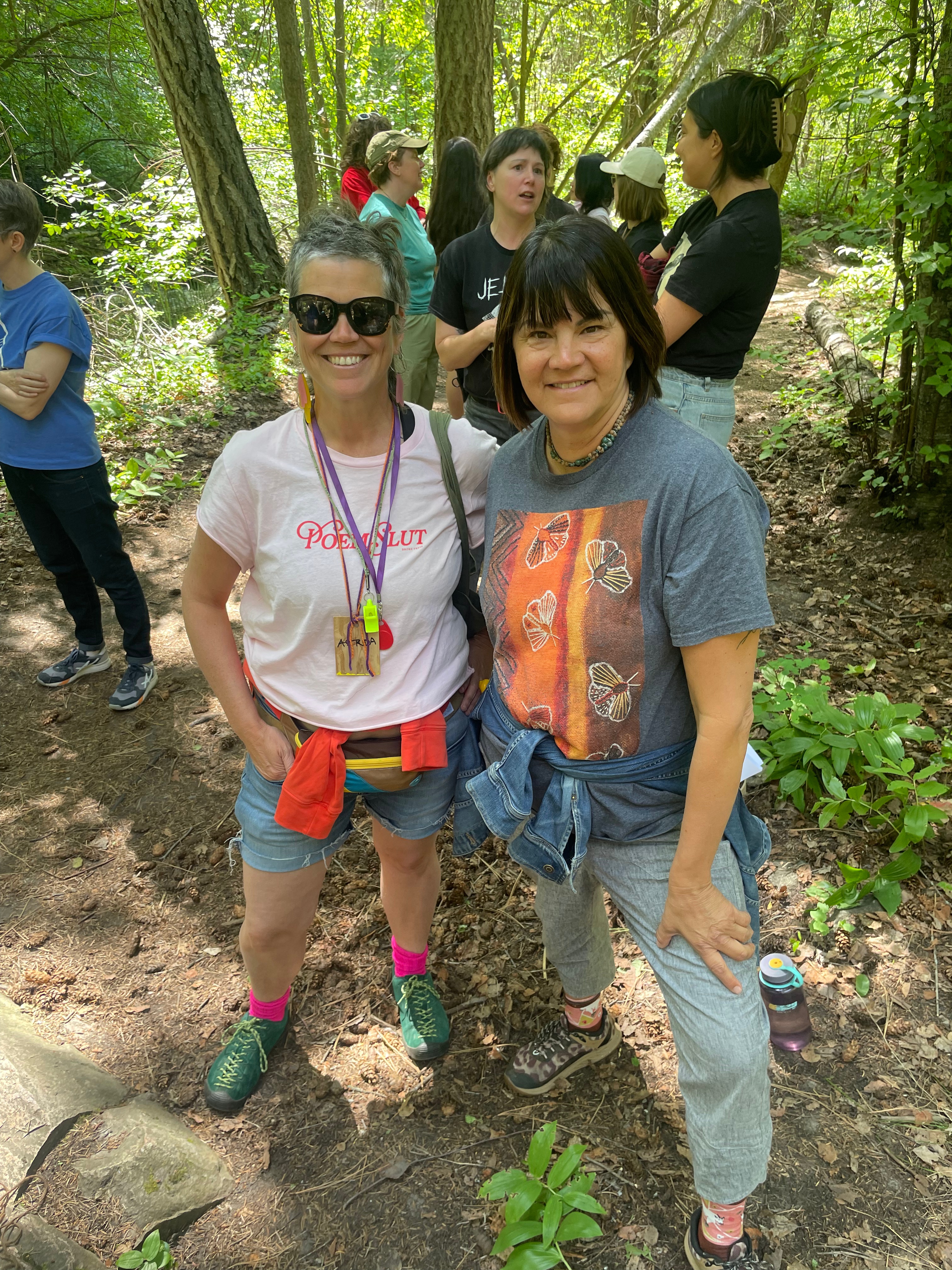
 The FEELed lab