Phase, Salt, and Story at Kɬlil̕x (Spotted Lake)
MARCH 1st -10th, 2026
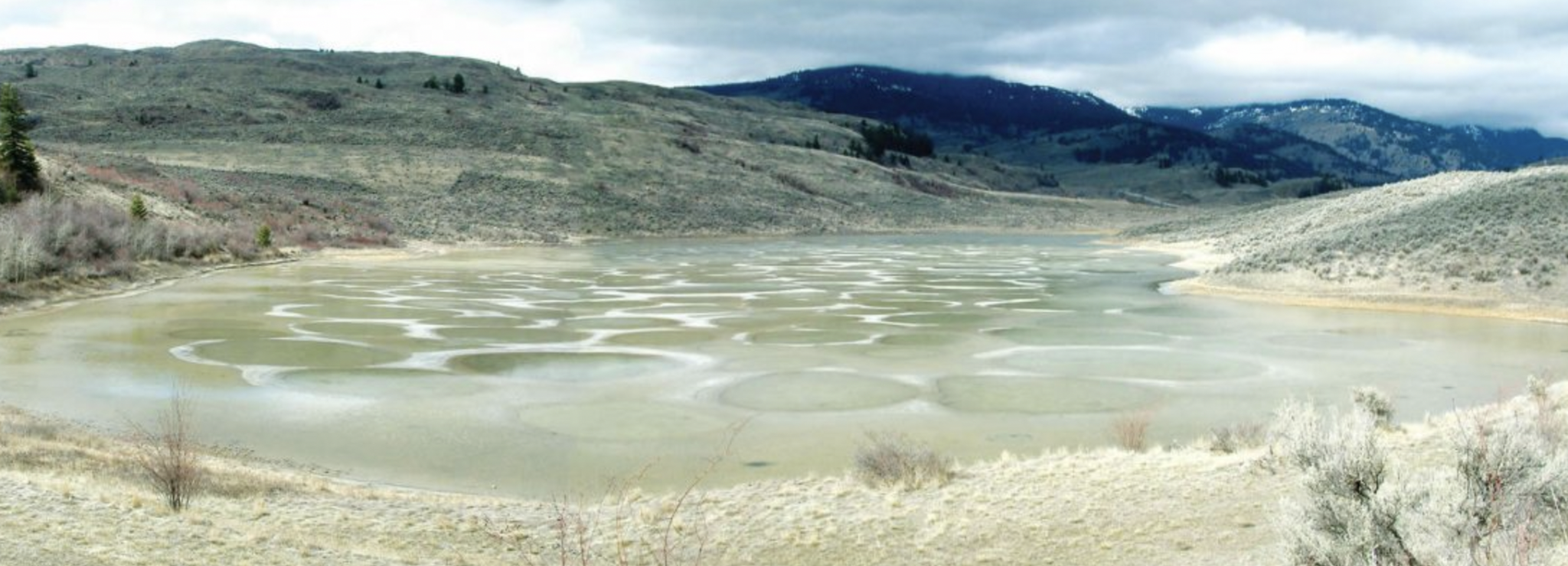
https://syilx.org/about-us/syilx-nation/spotted-lake-2/
“Since the dawn of history, Spotted Lake or “kɬlil̕xʷ” as we call it, has been a sacred place. Indians from all tribes came to visit the lake for the medicine the lake contains. The ceremonial cairns, too numerous to count that surround the lake testify to that. Some of these are so ancient they have sunk underground and only their tops remain above ground. Some are buried altogether. There are many stories told by our ancestors about the cures this lake has provided, physically and spiritually through its medicine powers.” – Statement of the Okanagan Tribal Chiefs on Spotted Lake (1979)
This residency brings together artist Nina Vroemen and scientist Dr. Julian Self and their shared interests in material behavior—glaze chemistry (ceramics) and phase equilibria (materials science)—at a unique site close to the Woodhaven residency.
Listen to Julian and Nina on CBC Daybreak South (March 9) here!
The interdisciplinary research and storytelling project is centered on the Spotted Lake (Kɬlil̕xʷ) in the Okanagan Valley—an Indigenous sacred site of healing, ceremony, and geological awe stewarded by the Syilx Okanagan Nation. The lakes’ striking mineral formations, shaped through cycles of evaporation and precipitation, offer a rare convergence of cultural meaning, geological time, and planetary science.
While the Spotted Lake is not a salar in the strict geological sense, it shares important characteristics with evaporite systems such as the Salar de Atacama in Chile. Both landscapes are salt-rich basins that have been studied for their relevance to astrobiology, particularly in relation to the formation of ancient lakes on Mars. These scientific parallels stand in contrast: the Salar de Atacama is currently being transformed by intensive lithium extraction, while the Spotted Lake remains culturally protected through Indigenous stewardship and restricted access.
The residency will culminate in the creation of a process-based installation that makes the research process visible. From cosmic lifeforms and traditional knowledge to Epsom bath soaks and batteries, the project maps its curiosities and intellectual, ethical, and creative tendrils. Rather than presenting a finished linear narrative alone, the installation creates an experience of stepping into the entangled forms of knowledge-making.
Julian Self

Julian Self is an Assistant Professor of Chemical Engineering at Polytechnique Montréal. He studies phase equilibria and liquid solutions, in contexts ranging from electronic waste recycling to electrolytes used in batteries. He asks questions such as: When do liquid mixtures freeze or separate?
Dr. Self received his Ph.D. from UC Berkeley in 2021 in materials science where he studied liquid electrolytes for conventional batteries, along with newer batteries which could be based on calcium or magnesium. Currently, he resides in Montreal.
Nina Vroemen
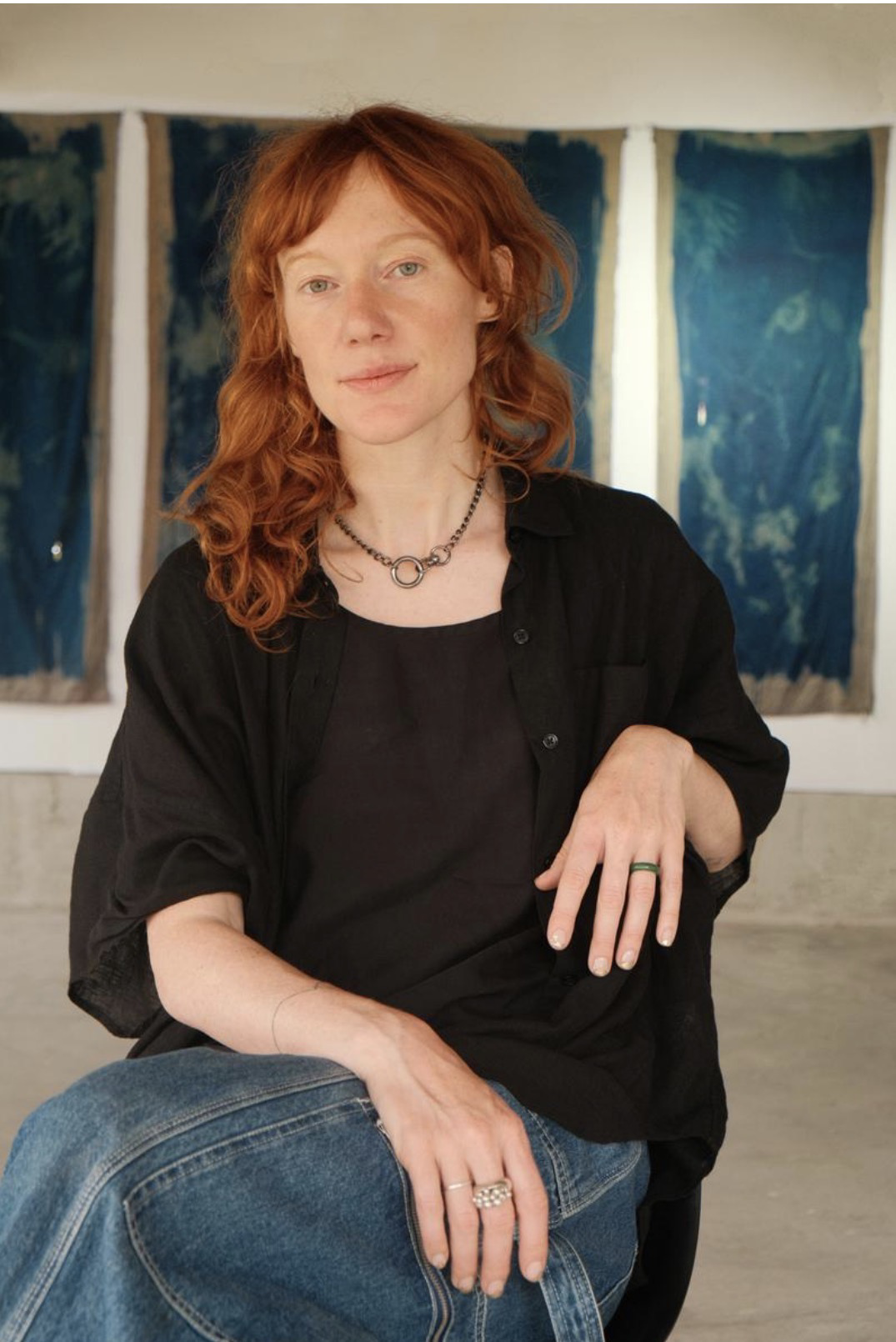
I am interested in how art can activate an ecological way of thinking rooted in environmental and social justice. Scientific and surreal, my work intertwines the elemental and mythological. Through experimental methods that span video, performance, ceramics, and installation, I practice storytelling, revealing intimacies in the unexpected. I am fascinated by the agency and legacies of materials and their potential as witnesses; full of history, story, warning, and hope.
Water flows through all my work, it carries the poetics and politics of this miraculous substance that supports all life on the planet Earth.
Nina Vroemen is a multidisciplinary artist and educator who makes work about ecology that is speculative and embodied. Born in Gatineau, Quebec.They currently live in Tiohtiá:ke (Montreal), on the traditional territory of the Kanien’kehà:ka.
Their recent shows include a solo exhibition at L’Ecart, ground is the bottom of anything (Rouyn), Engaging the margins at Beal Centre for Art + Technology (Irvine), Sentient Disobedience at the PHI (MTL), IGNITION 19 at the Ellen Gallery (MTL), Marées Queer Tides at Gallery Sans Nom (NB), Artch(QC), Watershed Art and Ecology (CHI), Points de Bascule,Centre Clark (MTL), and Darling Foundry (MTL).
With their focus on Art and Ecology, they have been invited to international gatherings on climate change, such as the More than Human Life MOTH gathering, organized by the NYU School of Law and Theory of (Climate) Change <–> Practice of (Climate) Change: Feminist, Queer, Anticolonial Propositions, organized by the Institute of Environment in Sydney Australia.
They have participated in numerous artist residencies, including Centre PHI public engagement (2024), Studio Kura (2024), Eastern Bloc (2023), Performing Arts Forum (2023), ARTSCAPE Gibraltar (2022), RURART (2020).
Their work has been published in Bodies of Sound: Becoming a Feminist Ear (Silver Press, 2024, UK), Being a Body of Water (PHI 2024) Engaging the Margins (UC Irvine, 2024), esse: art + opinions (September 2023).
 The FEELed lab