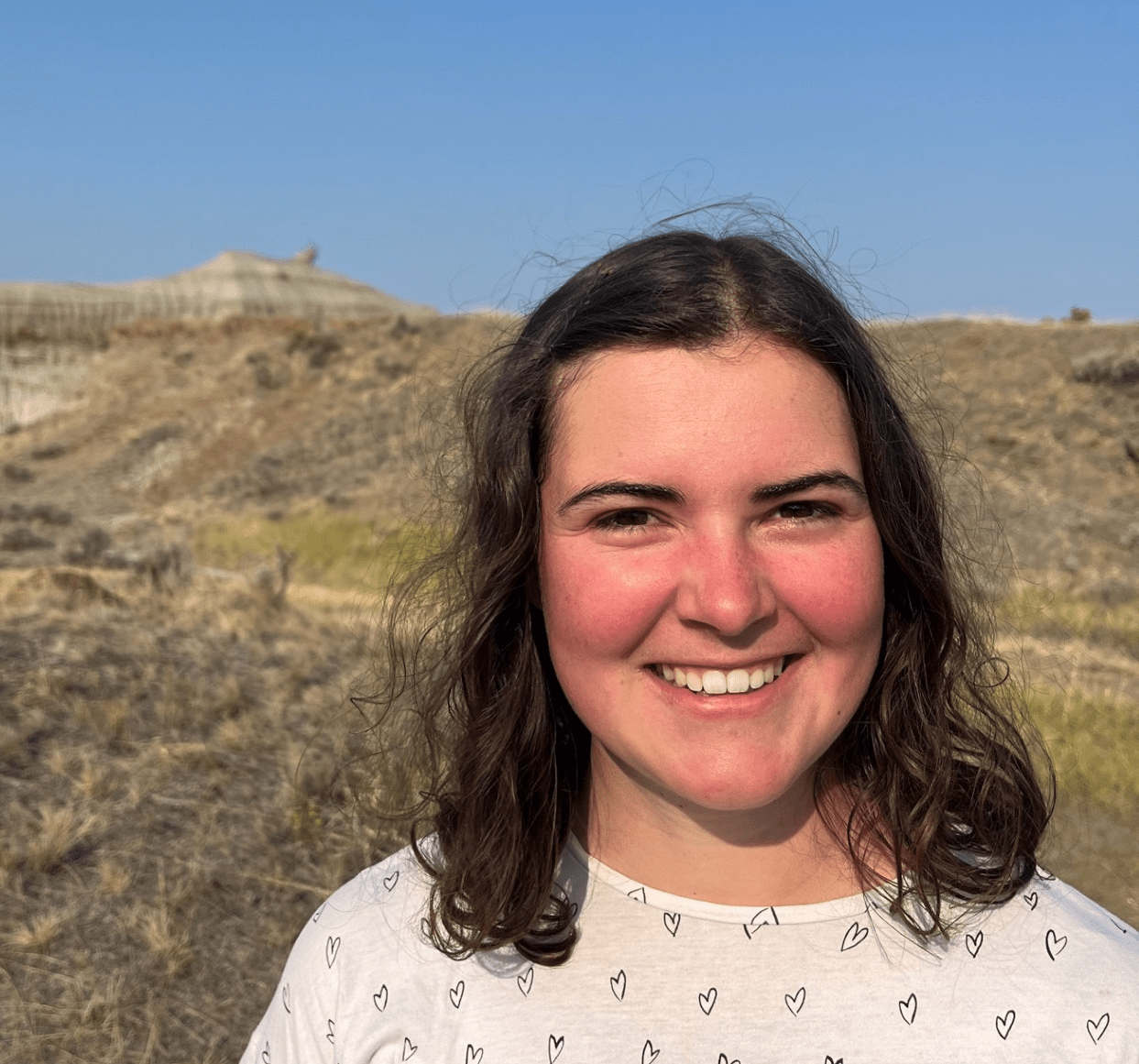
As we welcome new people to the FEELed Lab, we want to make space for longer introductions to project team members and research affiliates joining us this year. This profile is on Emma Carey who is working on the Enhancing Access and Inclusion in Environmental Humanities Research Practice Project.
1. Can you tell us about your work/research?
My research interests are primarily around breaking the human/nature dichotomy that has caused such destruction. Countering the idea that humans are separate from nature requires rekindling relationships with the more-than-human world. Noticing and being present (having conversations) with the birds, rocks, grasses, lizards, fungi, and other beings around us is vital. My thesis project will study invasive plant species and how we can have a less antagonistic relationship with them. Being a mediator rather than an exterminator. With invasive species, a lot of histories are unspoken about the negative human-induced landscape changes that create the preconditions for invasive species to thrive at the expense of native species. Changing the way we interact with land is thus a vital consideration for this project.
2. Why did you want to work with the FEELed Lab?
The welcoming environment of the lab and the people that are part of it was what drew me to work here. The people are very enthusiastic to create positive change in the world, and the forest around the lab is stunning. Being able to work in a space that I can step outside and breath in the same air as the Ponderosas is inspiring. It is not overly controlled like most of the on-campus spaces are. There is also something to be said about the diversity of projects people work on at the FEELed lab. And personal emotions and reflections and can be included in that work! Coming from a natural sciences background, that is such a welcome change for me.
3. Why are expansive engagements with environmental issues important?
You can miss a key aspect of a problem if your scope is too narrow. In our current times of wicked problems that are extremely difficult to solve, thinking across disciplines is vital. Currently, there are three key disciplines that I draw from. Natural sciences can help with specific understandings of ecology and biodiversity. Art can help to include emotions and individual understandings of environmental changes, while expanding what can be researched. Studies around anti-colonialism and decolonization offer an analysis of the sources of abusive relationships to the world around us, including discourse of the Earth as “resources”. By working with multiple disciplines, your view can become more expansive and you’re better able to see the root causes of an issue and what’s at stake.
 The FEELed lab