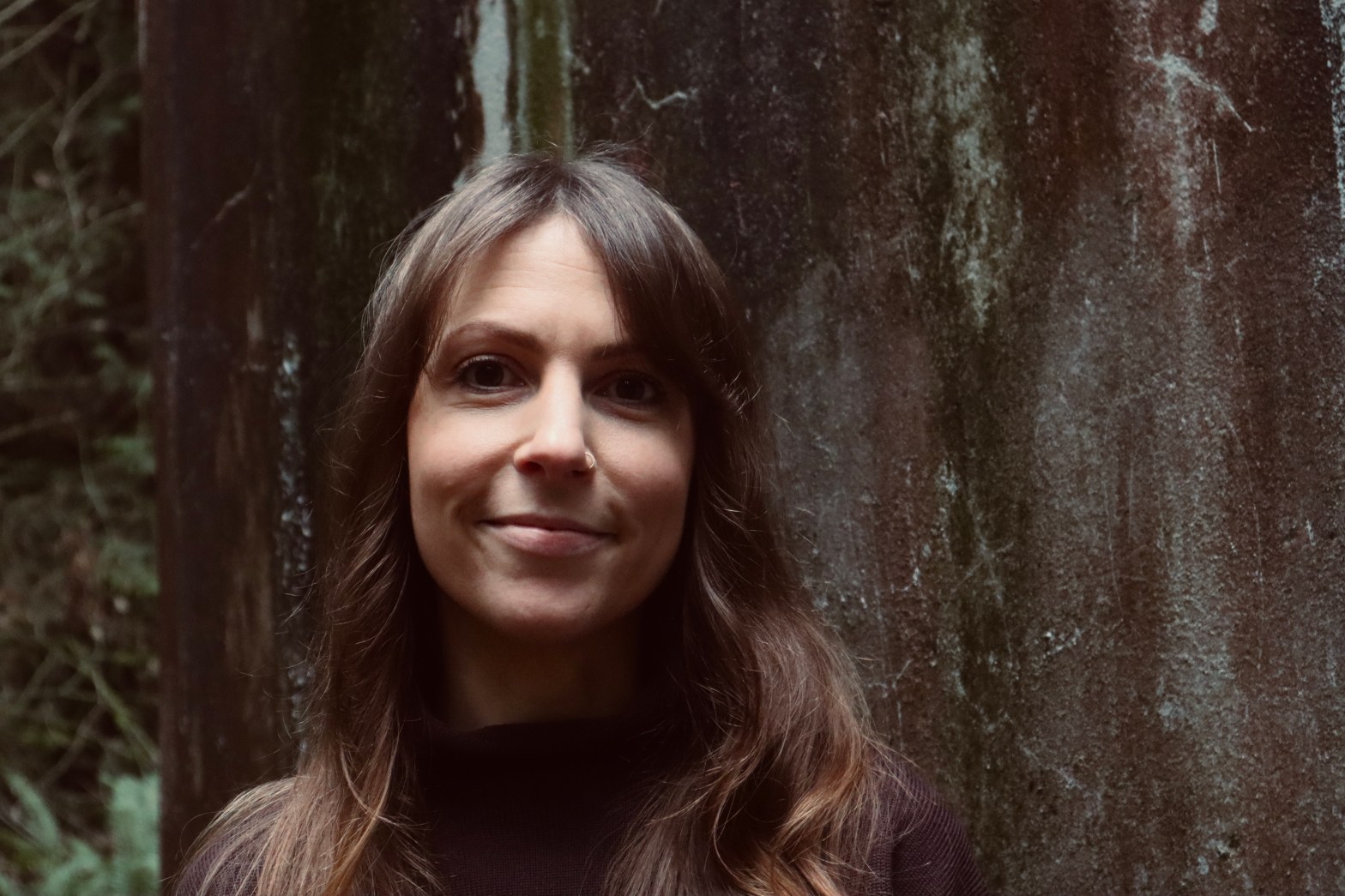
As we welcome new people to the FEELed Lab, we want to make space for longer introductions to project team members and research affiliates joining us this year. This profile is on Alex Berry who is joining the FEELed Lab to work on her project Sensing a Changed Climate in Early Childhood.
- Can you tell us about your work/research?
My research contributes to a larger collective dialogue in early childhood studies that is rethinking the construction of childhoods and pedagogies amid anthropogenic climate change. As part of this conversation, I’m interested in unsettling the Human of developmental psychology as the benign protagonist of early childhood education, a colonial epistemic projection which often figures children’s place relations as an act of exploration, conquest, and extraction. My work intersects the arts and pedagogical thought to interrupt this projection, and to modestly experiment with more live-able modes and ethics for being with young children in times of ecological uncertainty. My postdoctoral research at the FEELed Lab will seek to knot early years pedagogies with the feminist environmental humanities toward new ways of ‘sensing’ uneven, everyday climate realities with children. Thinking alongside pre- and in-service early childhood educators, the
project seeks to complexify prevailing sensory narratives in early childhood education, including the persistent reliance on optics/representation, as well as child-centered conceptualizations of the ‘sensory’ as intrinsic and divided (sight/taste/touch/smell/sound). - Why did you want to work with the FEELed Lab?
As an incubator of interdisciplinary thought and action, the FEELed Lab is an incredibly hospitable space for pushing early childhood’s disciplinary framings beyond its status quo. I’m energized by the FEELed Lab’s commitment to situated, ‘felt’ knowledges that are accountable to shifting settler-ontologies of human-nature relations. I’m curious about how ‘doing’ early childhood pedagogies, with this commitment at heart, might open up unexpected new collaborations for thinking through climate dilemmas in the early years (and beyond!). Marisol de la Cadena’s (2022) words feel particularly salient here; she says, “the relations we think with are consequential to what we think” (p. 445). As I set out to begin my postdoctoral work with the FEELed Lab, I hope to hold onto the potentiality of these (not-yet, in-the-making) relations – and their consequences – as a proposition for early childhood pedagogies. - Why are expansive engagements with environmental issues important?
When I think about ‘expansive engagements’ with environmental issues, I’m reminded of what feminist science and technology scholar Donna Haraway (2016) calls ‘partial’ connections, and the generative possibility of coming together with others in spaces that are constituted by distinction. Engaging expansively, in this sense, isn’t synonymous with transcendence or scaling up toward big solutions, but rather it may be a form of collective labour that riffs with minor, tentative, flawed translations across multiple players. Thinking expansively with environmental issues seems to render unlikely accomplices and new collective formations. Within the current macro-overwhelm of climate disaster discourse, engaging with the partiality of expansive engagements feels urgent, productive, and possible.
 The FEELed lab