
This FEELed Note is from Emma Carey, a Master’s student in UBCO’s Interdisciplinary Sustainability program, who is also working on the Enhancing Access and Inclusion in Environmental Humanities Research Practice Project.
Hello fellow FEELers! Our team has been hard at work on the Access and Inclusion project, planning, thinking, and learning about how we can be sure to consider everyone’s needs in terms of providing safer, accessible, and welcoming environments for environmental humanities research.
From some of our initial learnings on this project, I hosted a zine-making workshop on access and inclusion at the conference for the Association for Literature, Environment, and Culture in Canada (ALECC). The conference was held in Waterloo, ON this year from June 19 to 22.
The goal of this workshop was to collectively think together in a creative way about cultural unconscious biases of embodied capacity (assumptions about what a given person’s body/mind
can do, which might not hold true for people with disabilities) as well as other barriers to access and inclusion people face. We’ve created a reading list around these topics that you can find here.
The workshop took the conference itself as a “place” where access and inclusion is relevant. We considered how access and inclusion is and is not achieved in the prep, arrival, and attendance of the conference. We thought through the following questions:
- What access considerations have arisen for you in planning, arriving, and attending this conference? How did this conference impact your finances? Was travel difficult for you? Did you need to make childcare arrangements? Have you felt you had enough energy during the conference?
- During your travel and during the conference, where did you experience comfort? Where was there discomfort? Were there instances you felt unsafe? What workarounds or hacks did you find to address access issues you encountered? Who or what helped you get here?

The DIY/collage aesthetic of these zines made it a low-stakes activity for everyone to participate in. Only allowing a short amount of time per page freed people of perfectionism and helped create comfort for those that felt they were not professional artists.
Much of the conference was spent listening to academic talks, people liked this creative activity that engaged a different part of them.
The act of switching zines fostered collaboration, it took effort as people made sure everyone had a new zine each time. Asking “can you pass the glue, scissors, magazine?” brought people together.
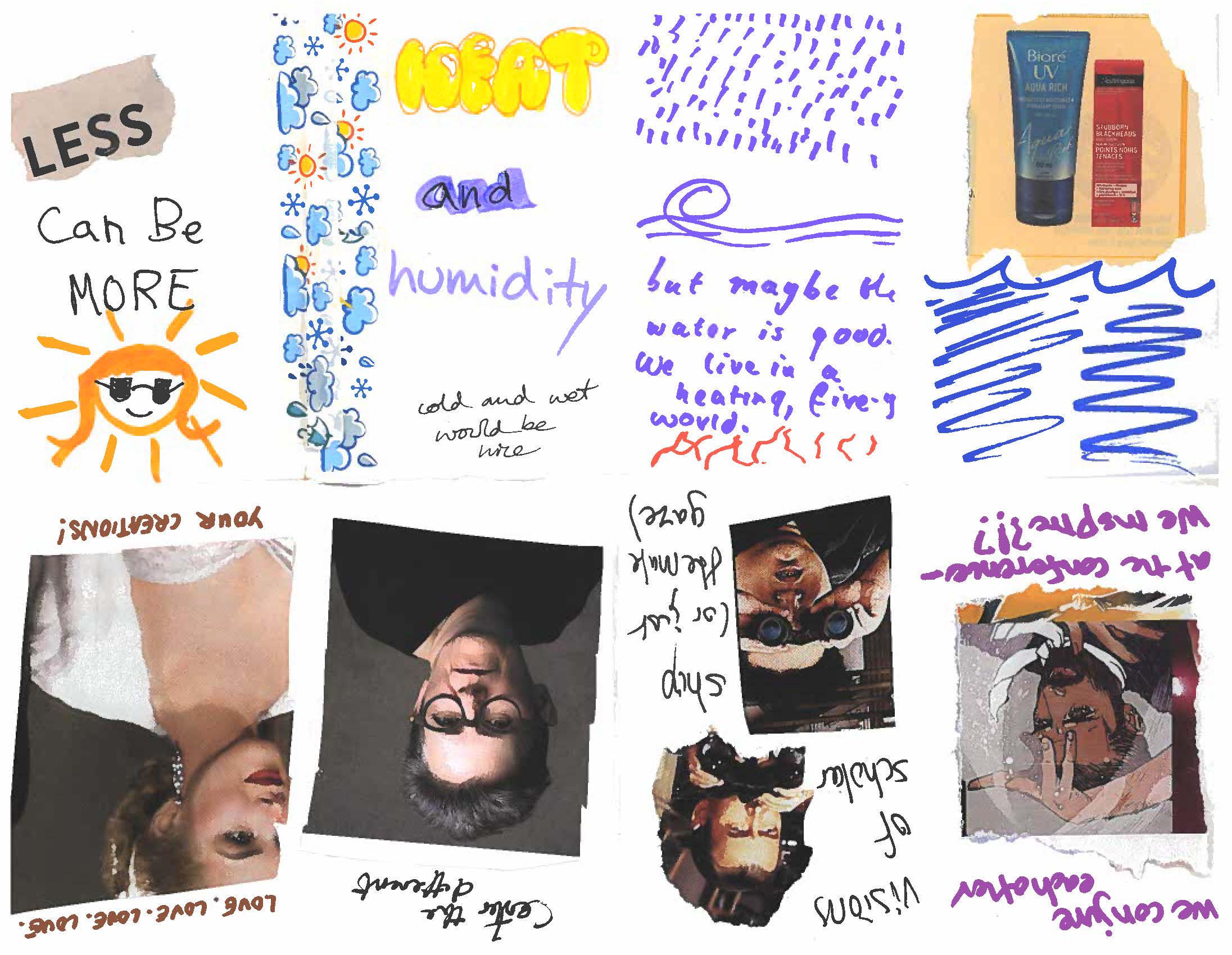
Since the conference happened during a heat dome in southern Ontario, the difficulty of high heat and humidity was a common theme!
If you are interested in holding your own collaborative zine-making workshop for community-building, research, or teaching purposes, the plan I used to host this workshop has been made available here. Feel free to adapt and use it for your own purposes.
Special thanks to Matt, Astrida, Jenica, and Natalie for their help developing this plan for the workshop.
 The FEELed lab