
My long-time colleague (and previous Visiting FEELer) Jennifer Hamilton and I just finished writing a book called Weathering Together: Feminist Practice for Climate Change (stay tuned for more updates!).
In one of its chapters, I describe how the FEELed Lab came into being. One of the important factors in the FEELed Lab’s emergence, I note, is the existence of other examples and models. Pointing to the FEELed Lab’s “make do,” “recycle/reuse/repurpose”, and “Do-it-Together” ethos, I wrote:
This also relates to the research: we rescale and try out ideas that come from elsewhere, which become something different when tended in this place. The FEELed Lab exists because other humanities research centres, labs and ephemeral collaborative infrastructures (summer schools, field schools) exist. Other examples allow us to think: “I can do that too, but differently.” We help each other imagine ourselves into being!
In that book, I point to Max Liboiron’s CLEAR Lab at Memorial University, as well as practices and infrastructures set up by researchers like Cleo Wolfle-Hazard, as examples to learn from.
As part of the FEELed Lab’s Access and Inclusion in Environmental Humanities Research project, Emma Carey and I have also been poking around for a while, looking for other models for us to learn from and with. We’ve looked at a wide variety of websites, from environmental sciences field stations to feminist and social justice media labs. We have noted some great ways in which these infrastructures signal their commitment to and practice of making this work accessible to and inclusive of folx often left out of this work. We’ll be sharing more about we’ve learned from this “field scan” in the coming year.
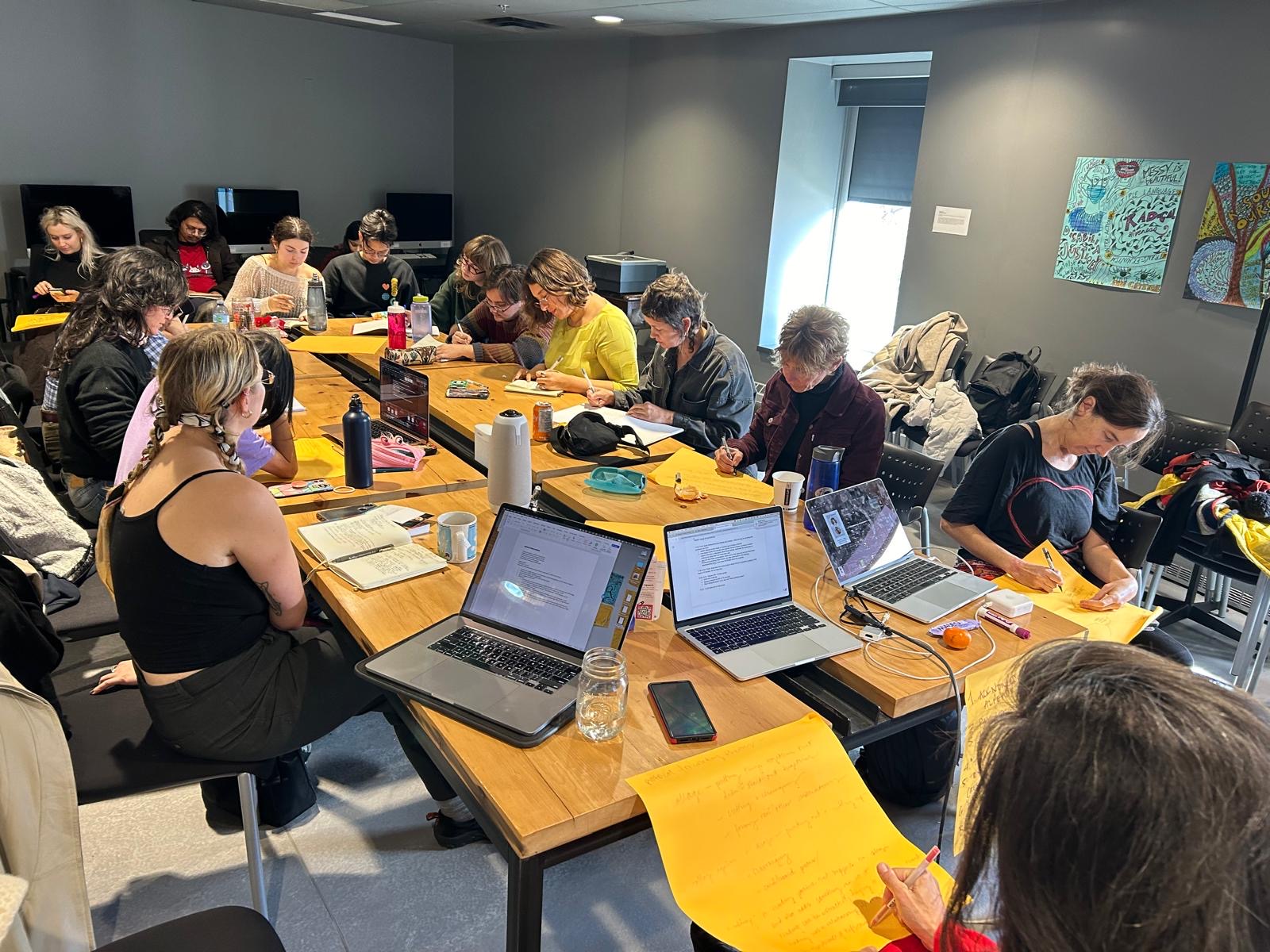
On a recent visit to Montreal, I had the opportunity to briefly visit two of these spaces at the Loyola Campus of Concordia University in person. The first was the Feminist Media Studio, “a practice-led research and creative lab, mediating gendered, queer and trans life entangled in long histories of colonization, border politics, climate crisis, displacement and occupation.” FMS member Alba Clevenger and Director Krista Lynes had invited me and my friend and colleague Lindsay Kelley, visiting from the Australian National University in Canberra, to run a small workshop on “Writing Theory as Method.” Here, we had an opportunity to think together about the relationship between theory and practice, and demystify the practical aspects of what we call “theorizing.”
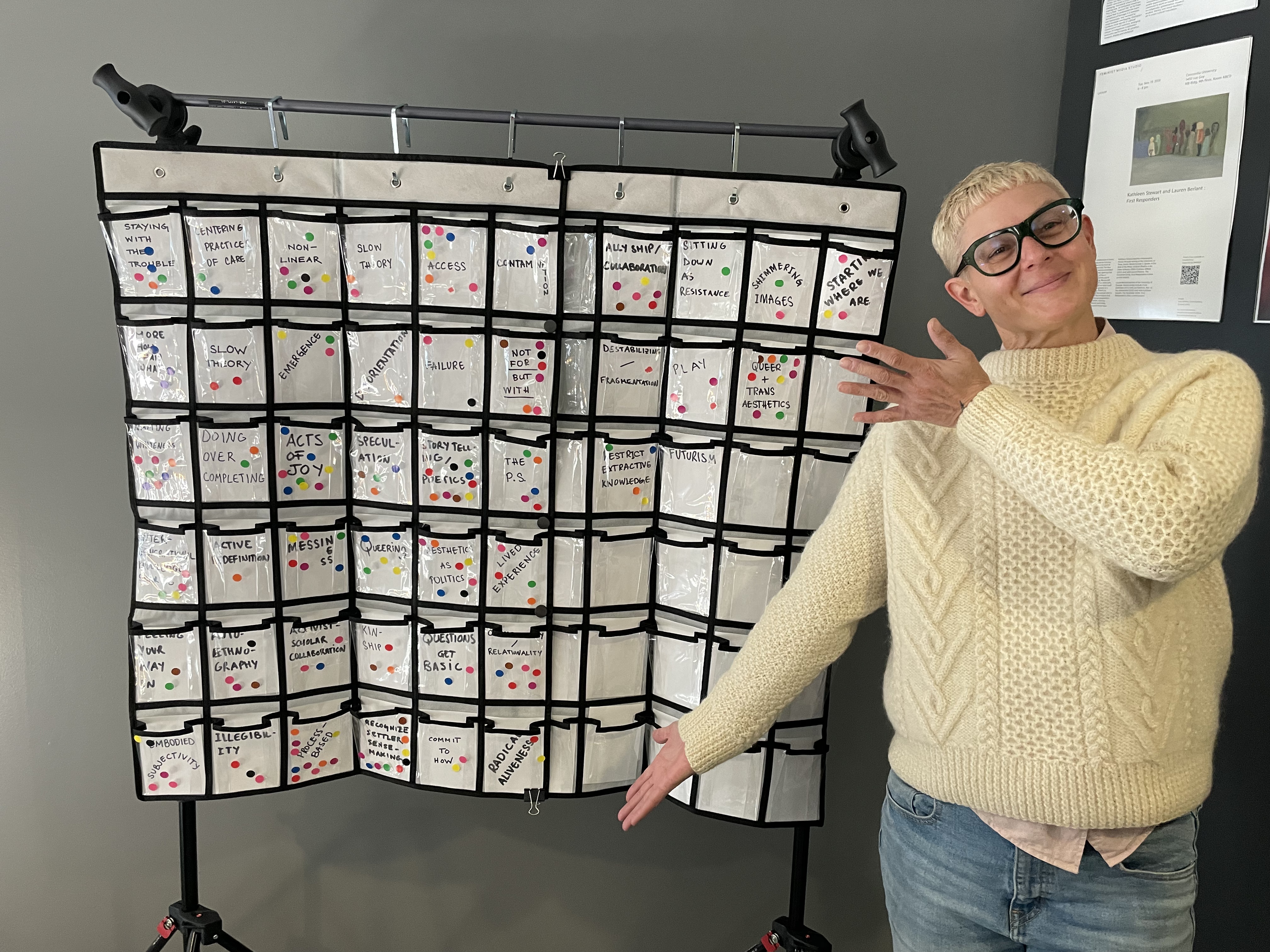
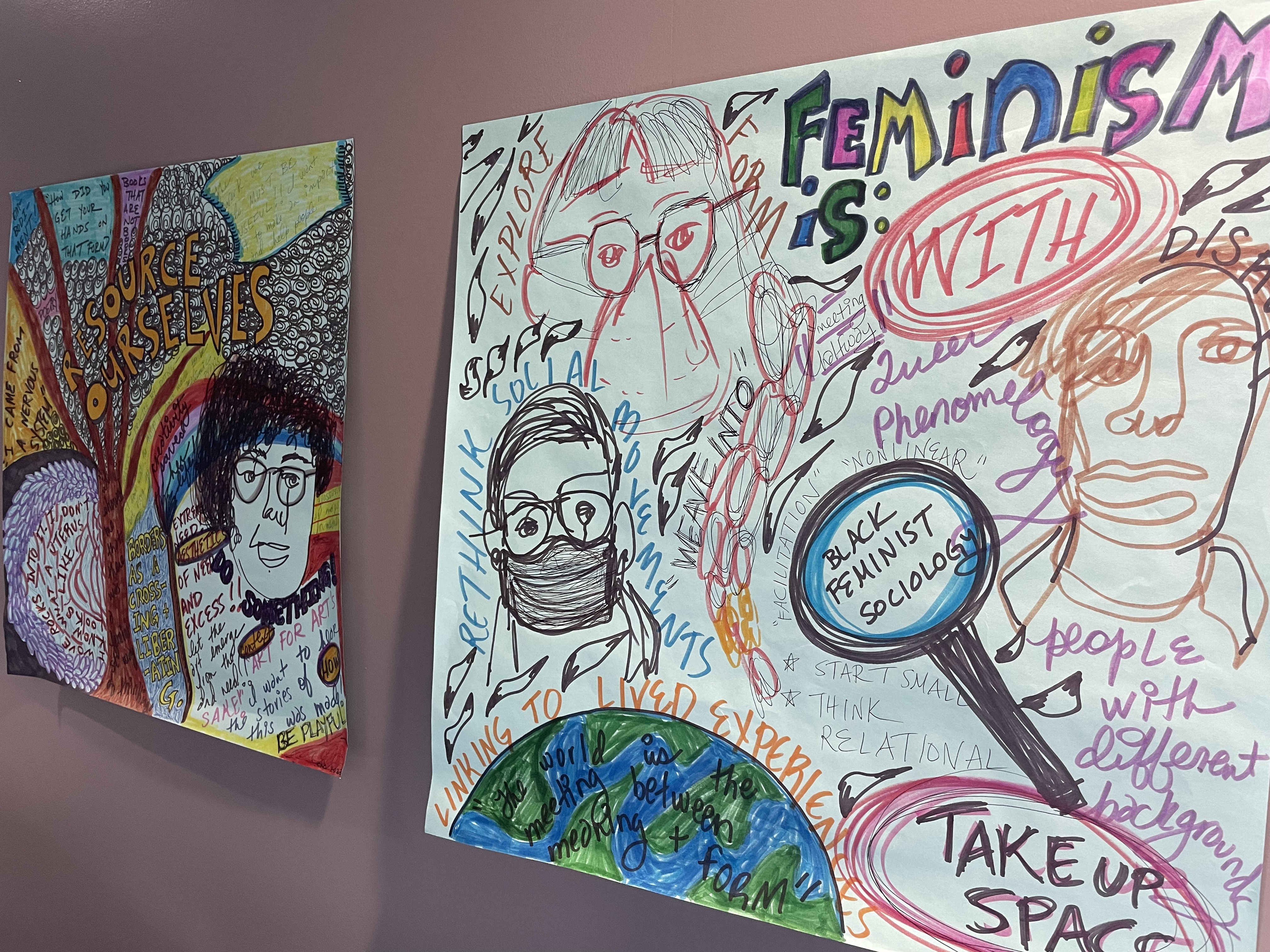
Since “feminist media studies” can mean a lot of different things, the FMS crew have evidently put a lot of time and thought into clarifying the specific kind of work they want to support and cultivate. We could see traces of their ongoing “Lab Values” project around the space. These variously lo-fi and hi-tec artifacts evidenced an in-process reckoning that created a certain kind of weather in the room: in this circulating atmosphere, “feminist” is necessarily anticolonial and trans-inclusive, and “media” can be a synonym for “relation.”
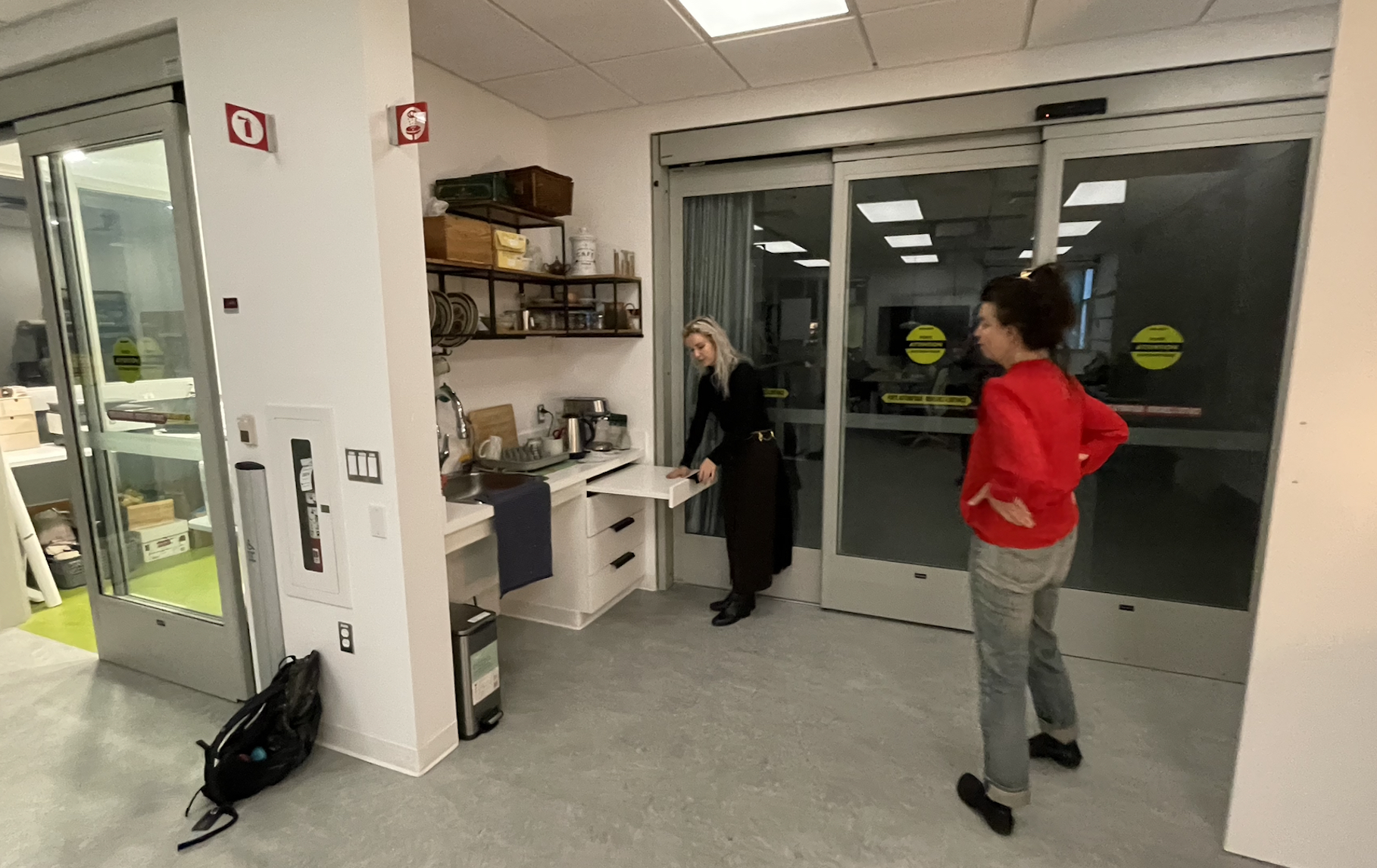
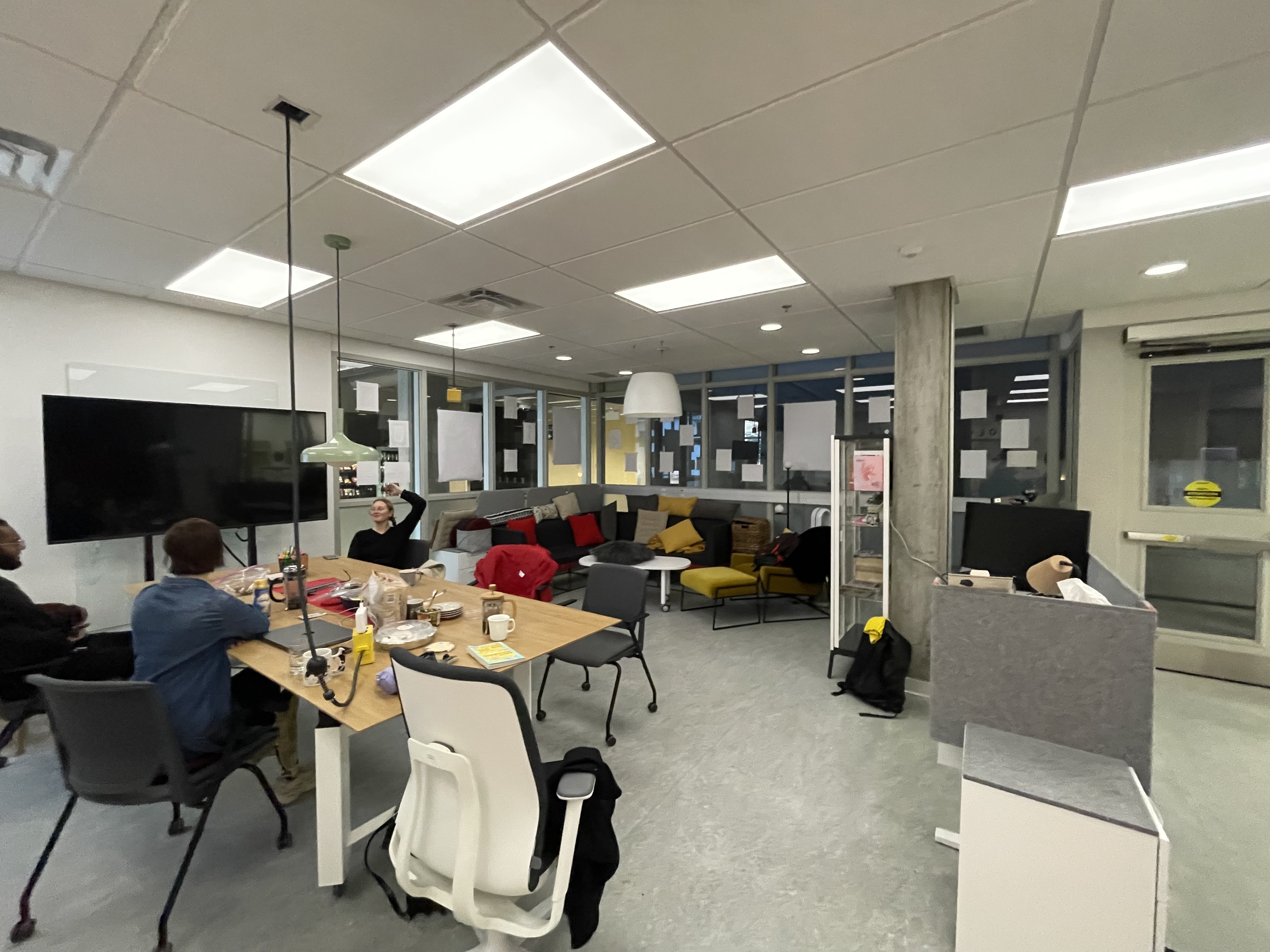
Just downstairs from FMS, Lindsay and I also had an opportunity to visit AIM, or the “Access in-the-Making” Lab, which is described as “an anti-colonial, anti-ableist, feminist research lab working on issues of access, disability, environment and care through creative experimentation.” Directed by Arseli Dokumaci, AIM is a holding space for research and research-creation by faculty, students and community members.
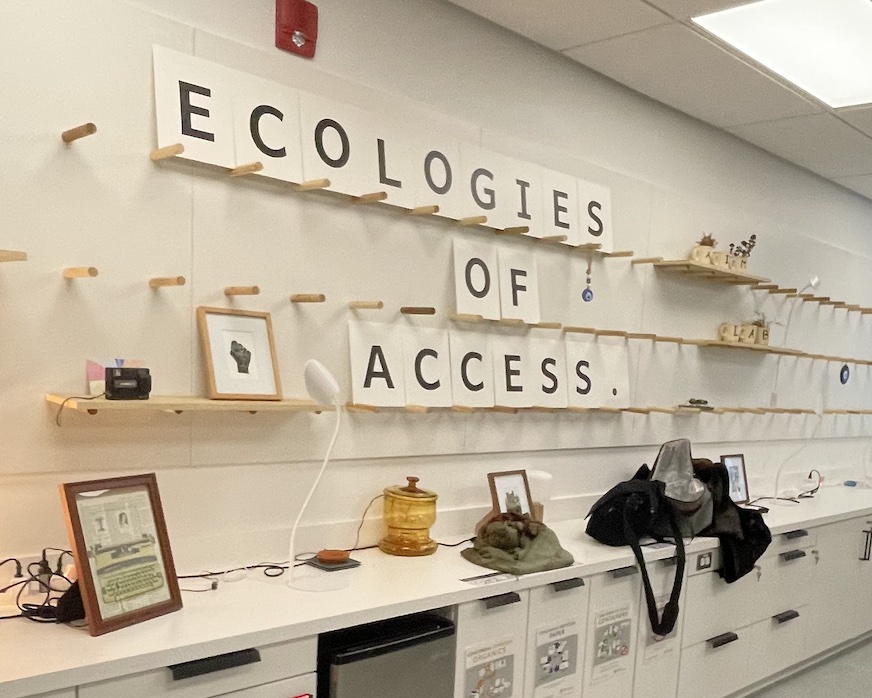
Although housed in a typical university building (dark concrete hallways, glaring fluorescent lights, hard edges) the folx at AIM had done many things to transform the space: comfy cushions, lamps, padded desk corners. At the same time, these features also ensured the space could be enjoyed by a huge variety of bodies, via low counters, rubber floors, high-contrast cupboard handles, wide automatic doors. We were offered coffee and delicious snacks by Rachel, Emery and Nicholas, as we sat around the adjustable-height table and learned a bit more about each others’ projects.
Hopefully, the near future will bring more opportunities for the FEELed Lab to learn from and with other feminist infrastructures like FMS and AIM. Although academia (and the humanities in particular) still celebrates the lone genius and the “single-authored monograph,” none of us figures this stuff out alone. We learn by collaborating with each other: sometimes in real-time, and sometimes across time and space, as we look backwards and outwards to see what others are up to.
In times like these, deliberately weaving closer connections to hold and support more ideas, more dreams, more bodies, more futures, is more important than ever.
 The FEELed lab