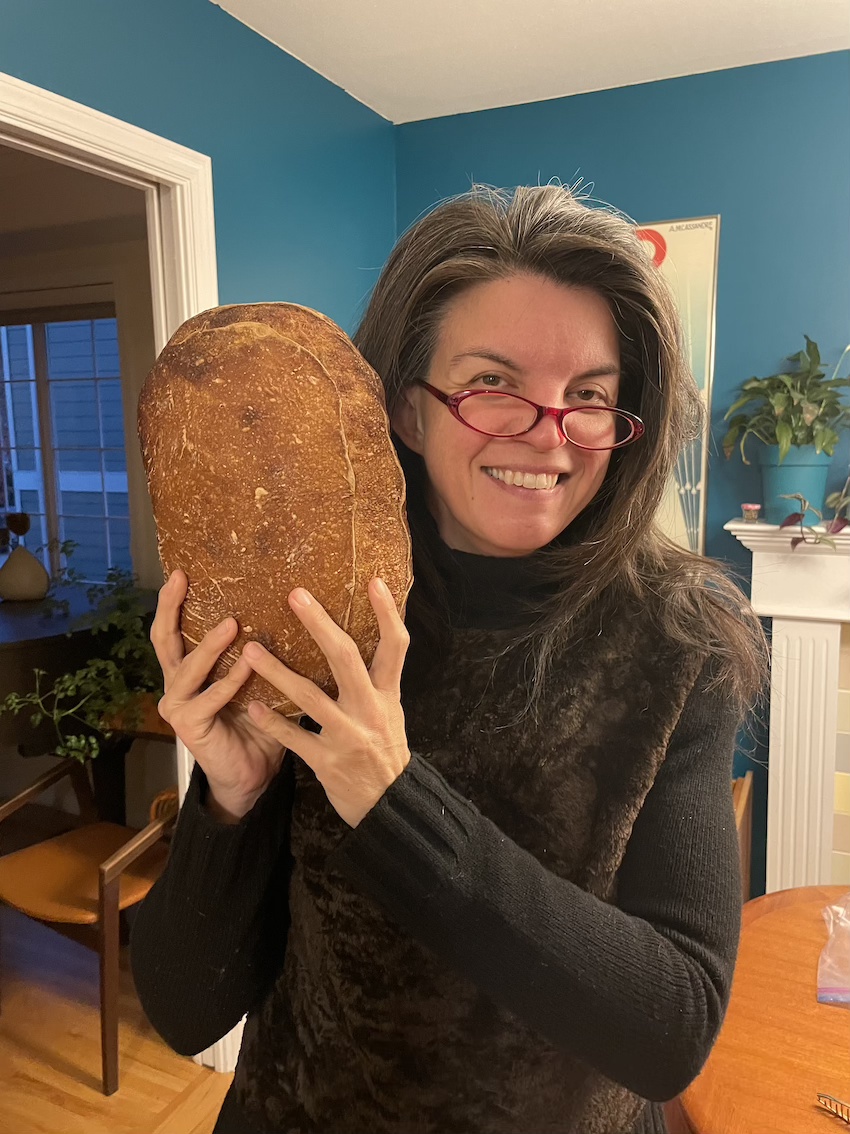
In early November, artist and researcher Dr. Lindsay Kelley visited UBC Okanagan (with a brief stop at the FEELed Lab!) to share some of her knowledge and practice related to taste, food, and metabolism as means for helping us understand our relationship to ecologies, histories, and places.
Lindsay describes herself as an artist who works in the kitchen. While some of her early research traced an important genealogy of bioart through the feminized world of baking, cooking and home economics (check out her first book, Bioart Kitchen), more recently she has been curious about how our bodies as metabolic entities provide a way into understanding planetary metabolic processes that are otherwise difficult to grasp. As a practicing artist, Lindsay writes about the work of other artists who are similarly curious about food, bodies, and their relations. Some of these questions are explored in Lindsay’s recently published book After Eating: Metabolizing the Arts (available open access!).
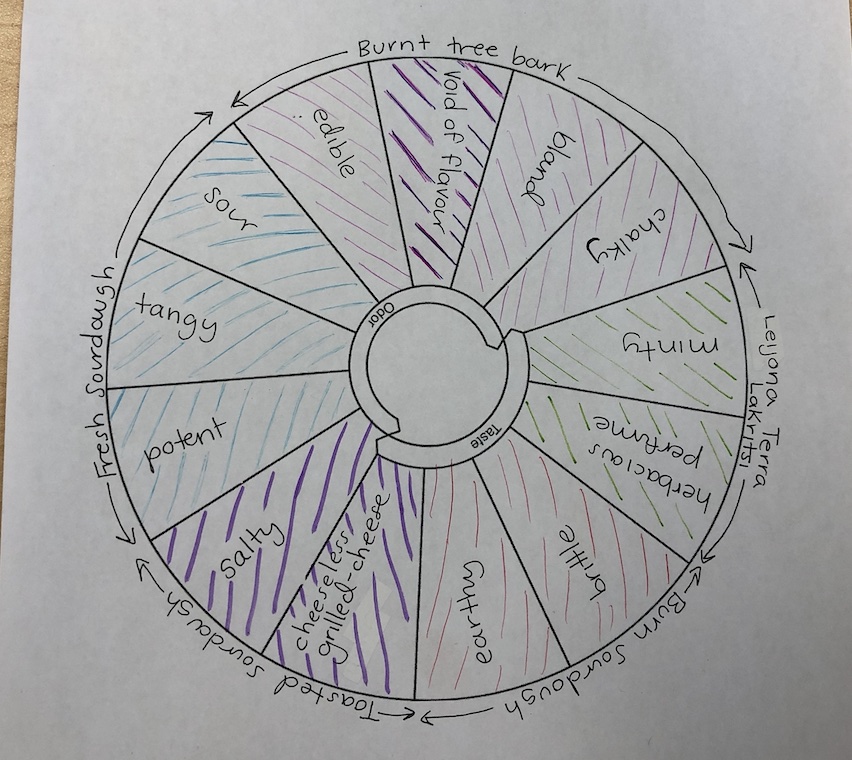
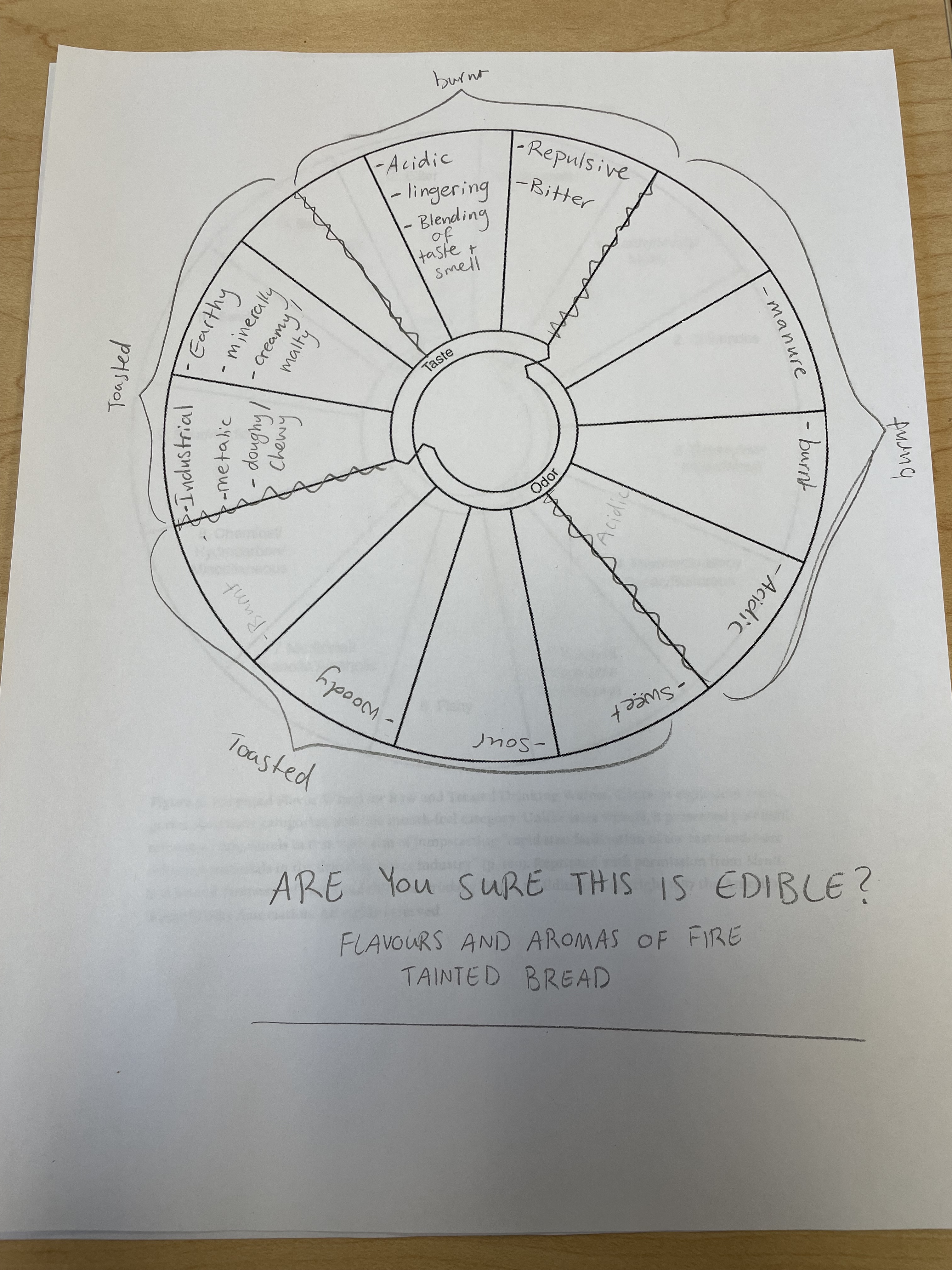
While visiting us here, Lindsay participated in Astrida’s “Place-based Methodologies” class, and invited students to consider how a climate changed place might taste. How will our palates change as ecologies around us burn, flood, become hotter, become drier, accommodate new species or push others out? Inspired by the Wildfire Loaf project by the Center for Genomic Gastronomy, students were invited to taste a loaf of bread, baked from local(ish) grains that was toasted to various degrees of burntness.

Students were also invited to taste the burnt tar infusion of terva (a Finnish candy) and a few pieces of burnt wood scavenged from the Glenmore Dog Park — the place closest to campus that was afflicted by the MacDougal Creek wildfire that swept through Kelowna in 2023. (Former FEELed Lab postdoc Alex Berry also consulted with Lindsay when developing her own taste-based pedagogies, which you can read about here.)
In response to Lindsay’s provocations, students created a number of bespoke taste wheels. This exercise helped them pay close attention to the ways their bodies (taste buds, olfactory processes, memory, affect) could be called on, in a more-or-less rigorous methodological way, to understand place and planetary processes such as wildfire.


Our informal Place-Based Pedagogies research group at UBC Okanagan (convened by Natalie Forssman and Astrida, and our new RA, Nela Rosso-Brugnach) also had an opportunity to meet with Lindsay over lunch, as part of our brown bag seminar series. Sharing sourdough bread and other fermented and locally sourced and prepared foods, we discussed how place is tasted, ingested, and metabolized, and shared strategies for bringing these kinds of experiential knowledges to our classrooms.

You might also be interested in foraging Linsday’s now twice tried-and-true icebreaker for getting to know students or participants in the room. Ask everyone: Look in your bag, knapsack or pockets. What kind of food do you have on you, or have you brought with you? (Examples ranged from homemade muffins and granola bars, to apples, old sandwiches, gum, coffee, and ibuprofen.) This is a great way to start a conversation about where what we ingest comes from, and whether or not we even know…. or want to know!
 The FEELed lab