Lily Packo (she/her) is an Indigenous undergraduate student in her third year of Anthropology at the University of British Columbia’s Okanagan Campus. She is passionate about exploring the connections between culture, environment, art and sustainability, with a focus on how these intersections support Indigenous conservation efforts and sovereignty. Her studies center on understanding how traditional knowledge and contemporary approaches can work together to promote environmental stewardship and strengthen Indigenous communities.
This FEELed Note is part of our occasonal series featuring outstanding feelz from undergraduate students.
In a world where development often puts profit over people, we need new ways to imagine the future. This approach looks at how higher education spaces, like student housing at Academy Way, can be reshaped with sustainable, decolonial practices. Drawing inspiration from Indigenous Futurism and Afrofuturism, these frameworks offer fresh perspectives that focus on sustainability, cultural resilience, and the importance of decolonizing knowledge, helping us build more inclusive and regenerative communities.
Indigenous Futurism Reminds Us that Innovation and Tradition Can Go Together
Indigenous traditions are frequently dismissed as outdated relics of the past. This colonial perception, which frames Indigenous groups as incapable of shaping the future, reinforces the hegemonic belief that these communities are inherently inferior. It disregards the resilience, adaptability, and innovation present within Indigenous ways of knowing and knowledge systems that have sustained communities and ecosystems since prehistory. These traditions are not stagnant; they evolve alongside the world, offering solutions that embrace sustainability, relationality, and holistic well-being. What many fail to recognize is the potential for advancement embedded within these knowledge systems, which could redefine progress in ways that challenge the destructive, profit-driven models of development prevalent today.
Indigenous futurism challenges the notion that innovation and tradition are incompatible. By integrating Indigenous knowledge systems, which prioritize sustainability, reciprocity, and collective well-being, with modern technologies, a more equitable and regenerative future becomes imaginable. This vision redefines progress, not as a departure from tradition, but as an evolution that honours and advances it.
Indigenous Futurism and Afrofuturism:
Indigenous futurism and Afrofuturism are critical frameworks that offer essential insights for assembling time, space, and digitality in equitable ways. Traditions derived from Black and Indigenous feminist speculative narratives effectively critique the violent structures of racial capitalism and settler colonialism, asserting that “time and place are political claims” (Elwood, 2024, p. 1). Engaging in speculative imaginations reflects existing socio-political realities and envisions alternative futures. Geomedia refers to the relationship between visual media, technology and geographical knowledge. Through a contemporary lens, the current hegemonic ideas of future geo-mediatization and the collaboration of technology and geography are deeply embedded in technology-driven capitalist structures and ideas (Elwood, 2024, p. 2). For this reason, it is essential to emphasize ideas of Indigenous and Black futurism as they acknowledge the embedded violence within Techocaptialist construction.
What is Indigenous Futurism?
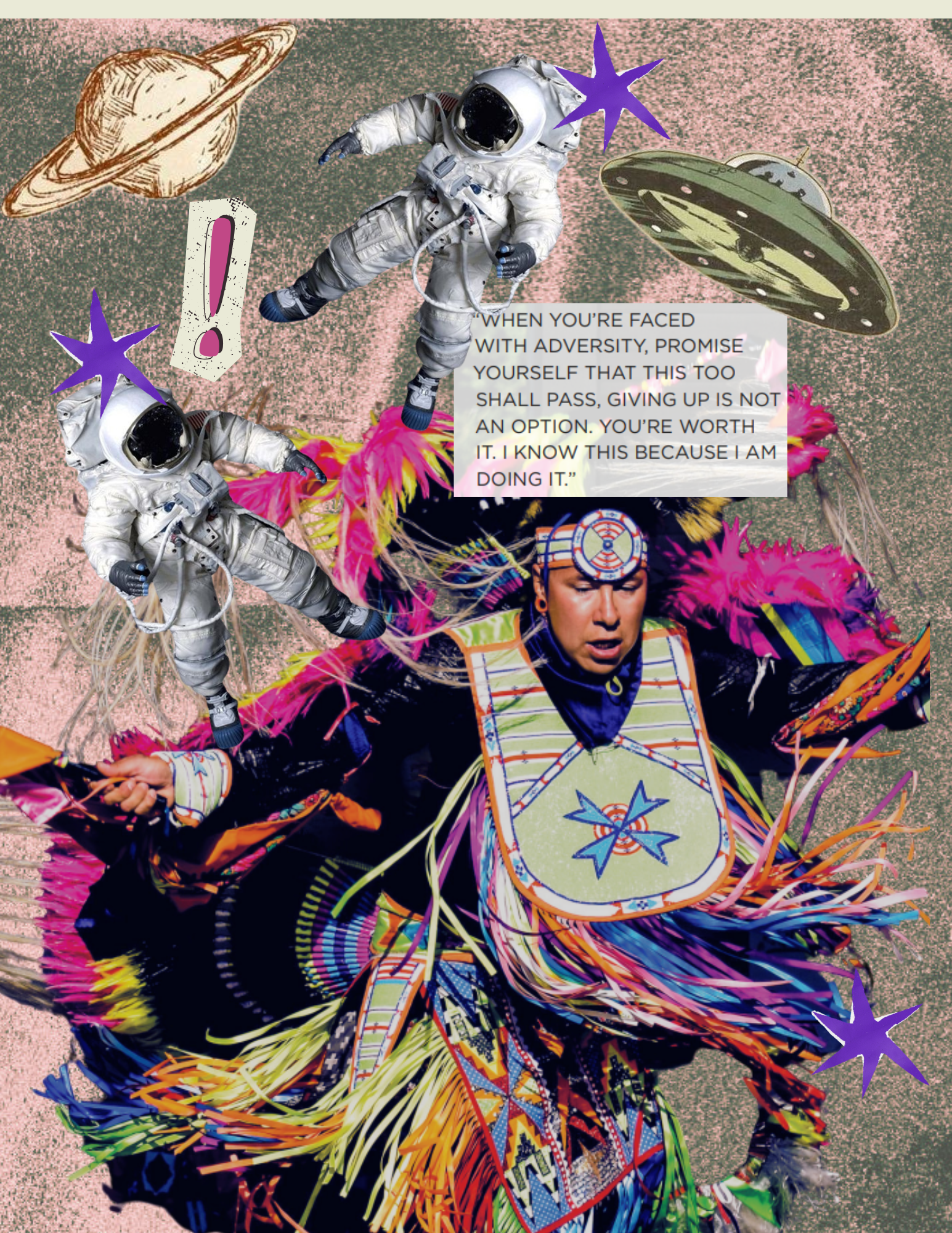
Indigenous futurism explores how an Indigenous perspective on future development can transform the existing violence embedded in our current social structures. Present-day developmental processes are rooted in labour exploitation, mass incarceration, and environmental extraction (Elwood, 2024, p. 3). In contemporary science fiction, the Western world’s future is often depicted as a desolate, lifeless wasteland, as the consequence of over-extraction, environmental degradation, and extreme wealth disparity. Although modern media and art forms acknowledge this dystopian vision, the present remains resistant to implementing meaningful change. Indigenous futurism draws on traditional knowledge from the past and present to promote decolonization efforts and environmental stewardship.
Learning Alongside Afrofuturism
Alongside Indigenous futurism, Afrofuturism shares a similar ideology as it reinvents the future, incorporating Black history and culture into the future of art, culture and technology. As a non-Black Indigenous person, I need to recognize that while both movements envision futures free from colonial oppression, they emerge from distinct cultural contexts and lived experiences.
Afrofuturism, rooted in the resistance to anti-Black racism and systemic violence, creates space for Black empowerment and reclaims narratives that have long been denied. My role is to engage with this movement respectfully, acknowledging the limits of my perspective and centering the voices of Black creators and scholars. Instead of incorporating my art, which can be viewed as a voice within Indigenous futurism, I need to learn from the many Black scholars and artists are owners of their own culture.
A perspective piece from The Metropolitan Museum of Art titled Afrofuturism in the Stacks (Washington, 2022), emphasizes the art done by Black artists focusing on cultural futurism through literature. Browsing the article introduces you to a variety of artists focusing on literature and visual art practices within Afrofuturism. This highlights the importance of Black feminist speculative fiction, which can be used as an analytical framework when discussing urbanism and environmental catastrophe within landscapes that capitalism, racial extinction and extraction created (Elwood, 2024, p. 2). Black female authors such as Octavia Butler, N. K. Jemison, and Nnedi Okarafor are prominent figures within this movement as they project a future expanding on catastrophic urban landscapes caused by these conditions.

Vital Blueprints
Indigenous futurism and Afrofuturism together provide vital blueprints for imagining decolonial futures. By challenging dominant narratives of progress, these frameworks create space for alternative visions that prioritize sustainability, equity, and cultural resilience, which are all essential values in the pursuit of a sustainable future. Connecting this to student living, it is crucial to emphasize the importance of decolonization within higher education. Universities must create spaces that foster discourse around these ideas, as they can serve as catalysts for a progressive and resilient future centered on sustainability. Specifically, in the case of Academy Way, it is not enough to simply incorporate sustainability technologies; it is equally important to integrate knowledge that challenges the principles of over-extraction and resource depletion. By doing so, these spaces can break the cycle of harmful practices and promote long-term, sustainable solutions that align with decolonial values.
A link to a downloadable file for the zine that accompanies this blogpost can be found here.
References
Thinking Geomedia Futures: Indigenous Futurisms, Afrofuturisms, and Counter‐Mediations of Temporality, Spatiality, and Digitality. (2024, September 3). Media and Communication, 12, 1-5. https://doi.org/10.17645/mac.8935
Washington, A. (2022, June 15). Afrofuturism in the Stacks. The Metropolitan Museum of Art.
 The FEELed lab