Lily Packo (she/her) is an Indigenous undergraduate student in her third year of Anthropology at the University of British Columbia’s Okanagan Campus. She is passionate about exploring the connections between culture, environment, art and sustainability, with a focus on how these intersections support Indigenous conservation efforts and sovereignty. Her studies center on understanding how traditional knowledge and contemporary approaches can work together to promote environmental stewardship and strengthen Indigenous communities.
This FEELed Note is part of our occasional series featuring outstanding feelz from undergraduate students.
Universities and colleges often serve as microcosms of society, where innovative ideas, environmental consciousness, and social justice movements take root. By integrating Solarpunk principles into student living, we can create environments that are not only sustainable but also foster collaboration, well-being, and community-driven change. Assessing areas like UBCO and Academy Way, there seems to be a void of self-sustaining community development. Speculative fiction can provide places such as Academy Way with a community-based and collaborative plan focused on sustainability and innovation.
In a world often dominated by dystopian narratives of environmental collapse, authoritarian regimes, and technological overreach, Solarpunk emerges as a counterbalance, offering a hopeful and actionable alternative. Rather than resigning to the idea that the future must inevitably be grim and disastrous, Solarpunk challenges this assumption by presenting a vision of a world where humanity has chosen sustainability, ethical technological advancement, and resilient, self-sustaining communities. More than just an aesthetic or literary movement, Solarpunk represents a framework for real-world change that can carry forward through generations.
What is Solarpunk?
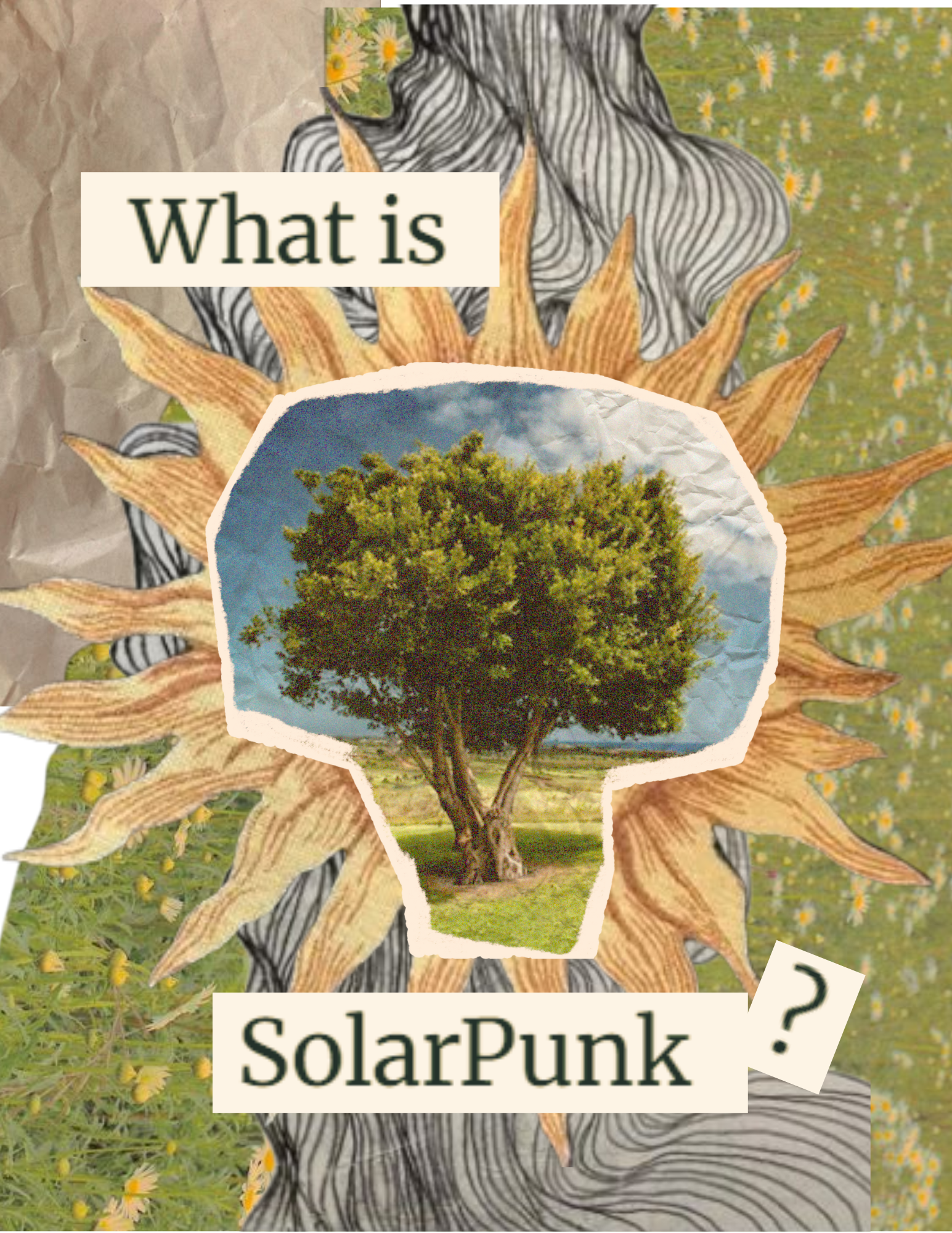
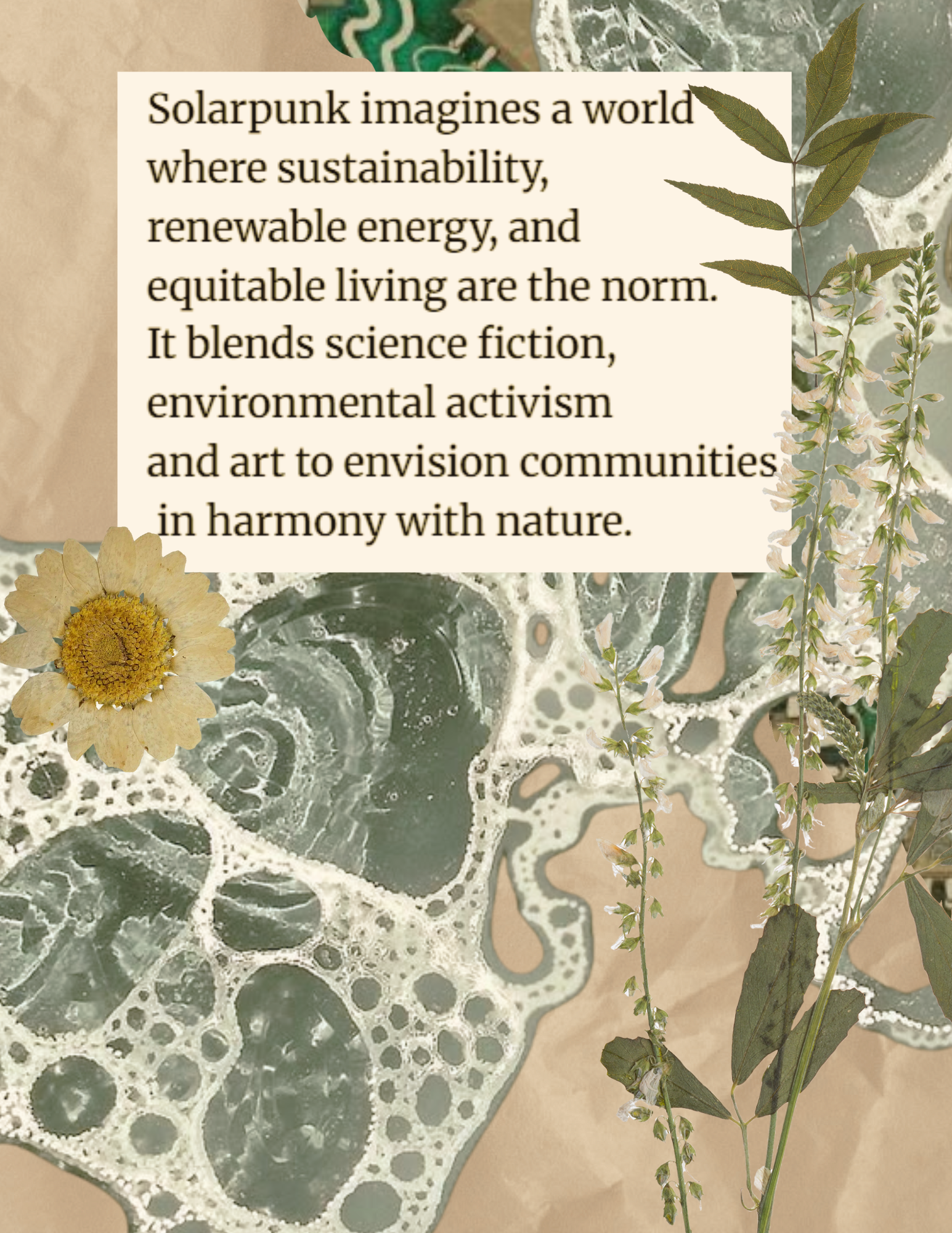
Now we should start with the simple question: what is Solarpunk? Solarpunk is a genre of speculative fiction that imagines optimistic futures shaped by sustainability, renewable energy, and equitable living (Walther, 2024, 163). It blends elements of science fiction, environmental activism, and artistic expression to create narratives that emphasize collaboration, ecological balance and coexistence. At its core, Solarpunk asks: What if we embraced solutions instead of despair? What if our cities were lush with green spaces, powered by the sun and wind, and designed to support communities rather than exploit resources?
Solarpunk separates itself from traditional science fiction as it is positioned as idealistic and grounded in practical reality. It acknowledges the challenges of climate change, social inequality, and technological ethics but insists that these challenges can be met with creativity and collective action. As climate change continues to shape global conversations, Solarpunk offers an alternative to the doomsday narratives that can often lead to climate anxiety, by focusing on solutions that depict sustainable societies.
Solarpunk and Student Living, On and Near Campus
With all that said, it prompts the question of what would a fully realized Solarpunk world look like, and which group is best suited to bring about this change.
Rethinking student housing means designing spaces that support different family structures, communal living, and shared resources. A Solarpunk-inspired housing situation would prioritize sustainable architecture with green roofs and solar panels. Alongside this there would be vibrant communal gardens, shared kitchens, and multi-functional spaces designed to foster collaboration, mutual support, and a sustainable development. This approach to community engagement collaborates with advanced sustainable education, fostering future advancements in research and technology.
sustainability into academic research and practical application. Greenhouses and biotech facilities can provide research opportunities for students in environmental science, agriculture, and renewable energy. Expanding these into engineering labs that focus on solar and wind technology creates hands-on learning environments that push the boundaries of sustainable innovation.
By embracing Solarpunk principles, universities can serve as a starting point for a more sustainable environment. Through green spaces, robust transit systems, inclusive housing solutions and self-sustaining local economies, institutions of higher learning can become models of ecological and social innovation. Implementing these changes on campus can set the precedent for broader societal transformation, proving that an optimistic and sustainable future is not only possible but within our grasp.

Solarpunk, Universities, and Collective Sustainability
This shift repositions higher education as a means of sustaining knowledge, culture, and community rather than being confined by traditional capitalist expectations of financial gain. Many university students lose sight of the intrinsic value and motivation behind their chosen fields, as they are often overlooked in the practical applications of their work. Instead of being recognized for their skills, creativity, and contributions, they are frequently reduced to a mere monetary value. By reframing education as a tool for long-term sustainability both personally and collectively, students can find deeper meaning in their studies and careers, fostering a sense of purpose beyond economic constraints.
In a time when the future often feels uncertain, Solarpunk offers a vision of hope, resilience, and possibility. By integrating its principles into higher education, we can create institutions that not only equip students with knowledge but also empower them to shape a more sustainable world. Universities have the potential to become living examples of Solarpunk ideals, demonstrating how technology, environmental stewardship, and community-driven initiatives can coexist. When education is reframed as a means of sustaining both people and the planet, students can rediscover their passion and purpose beyond mere economic survival. Through innovative thinking, we can move beyond dystopian ‘what ifs’ and begin building the future we want one rooted in sustainability, equity, and shared prosperity.
A link to a downloadable version of the zine that accompanies this blogpost can be found here.
REFERENCES
Walther, D. (2024). Solarpunk – Between Aesthetics and Activism. Anglistik, 35(1), 163-181. https://doi.org/10.33675/ANGL/2024/1/15
 The FEELed lab