This blog post was written by FEELed Lab Administrator Julia Jung.
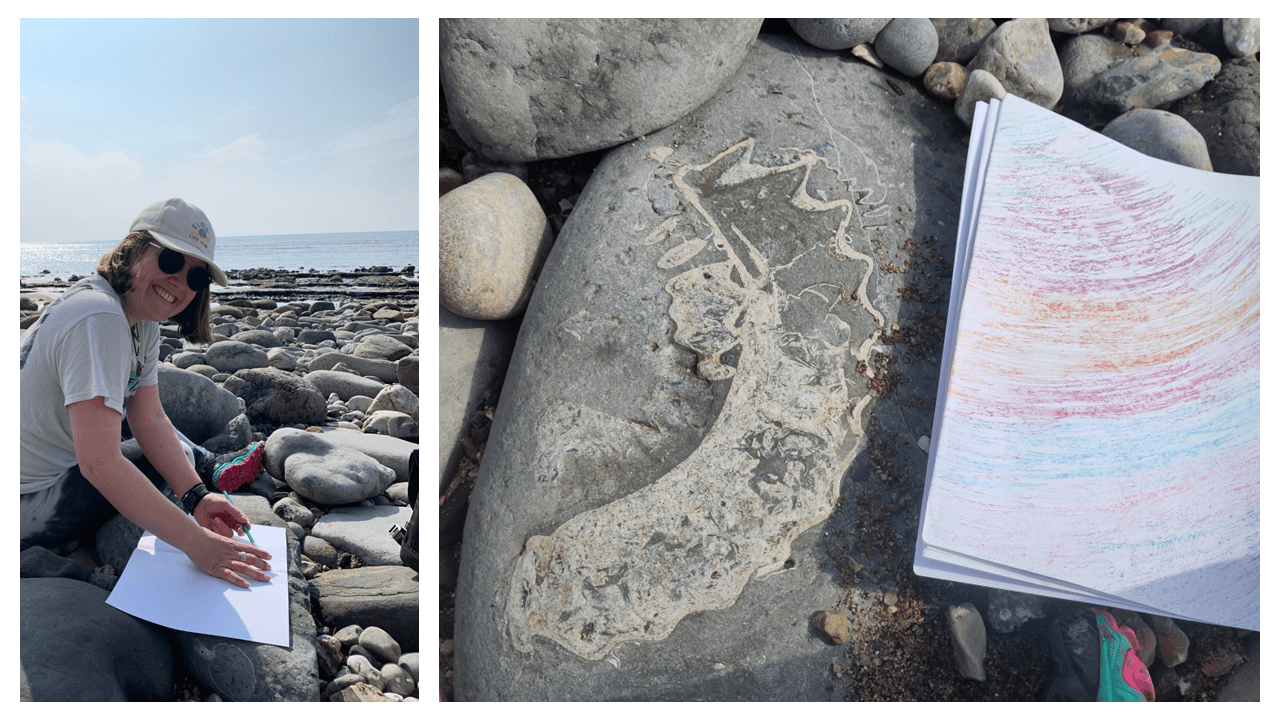
Recently I found myself tracing ammonite fossils on a rocky beach in Lyme Regis, UK. Bathed in a surprisingly strong April sun, I kept moving from ammonite to ammonite, trying to find the ones who have left remnants prominent enoug to show up on my tracing paper. All those ammonites around me used to swarm the sea surrounding this beach about 199 million years ago and actually trying to visualize what that would have been like left me feeling dizzy.
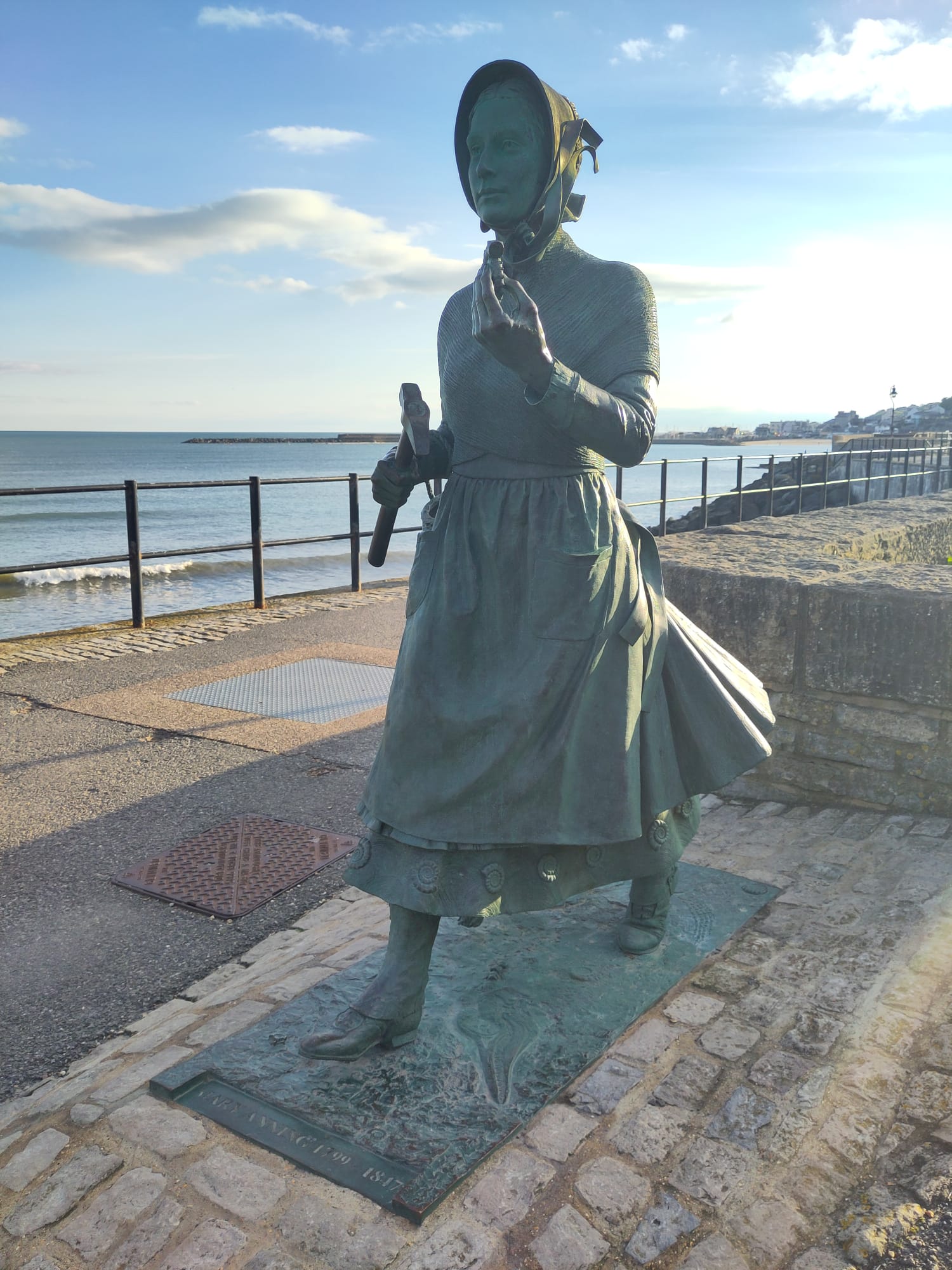
Lyme Regis is the birthplace of Mary Anning (1799- 1847), a pioneer paleontologist and the so-called “unsung hero of fossil discovery”. Sidelined during her lifetime by her male scientific peers, Mary Anning was honored on what would have been her 222nd birthday with a statue in her hometown following the campaign of then 11 year old Evie Swire and her mother, Anya Pearson. They wanted to ensure Mary would be remembered and to put her back into the landscape she belongs to.
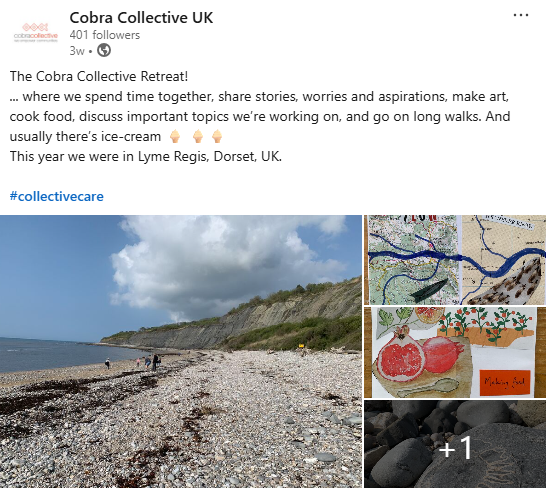
I found myself in Lyme Regis almost accidentally from 23-26 April 2025 for our annual Cobra Collective Retreat, pondering the question on how one can transition across labs and communities without leaving everything behind.
In the four years between finishing my Master’s degree and starting my PhD, the Cobra Collective had been my main intellectual and academic home. Now, being a part of the FEELed Lab, I have been wondering about how I can still stay connected to and share knowledge with the Collective, while wanting to be firmly rooted in Kelowna.
Before starting in the FEELed Lab, I had intentionally pulled back from my other communities and commitments, wanting to make sure to create space for something new. Soon, however, I realized that there were many crossovers in our work and opportunities to draw on what I’ve done with the Cobra Collective.
I think of this as a form of tracing, as a contrast to transplanting or transposing. Going back to what we did elsewhere and wondering about how to apply this here, being aware of the different settings and context. For example, for our FEELed Lab values project, I was able to directly draw on/ trace from a similar process we undertook with the Cobra Collective to develop our ethical principles. This helped me reflect again on our current practices in the Collective, bringing back new ideas on how to deepen the work we are currently doing there. One important way of staying connected in the Cobra Collective is our annual retreat. It’s a time to share stories, ideas, knowledge and practices – whatever we’ve done since we last met, scheming for new projects and creating something together.
Tracing for me became a metaphorical as well as literal exercise as I tried tracing ammonites on the beach, wondering about the others who have walked this beach before and how I might be able to connect to them. During our discussions, I shared some insights I’ve learned about knowledge mobilization this semester and the way we are currently updating our knowledge mobilization strategy in the FEELed Lab. In the Collective, we have also been debating how to best share, connect with and engage our community, our discussion bringing up new questions that I took back to the lab.
On our last evening of the retreat, we created zines, many of which echoed themes often found in the FEELed Lab: going with the flow, respect and ways of joyful resistance.
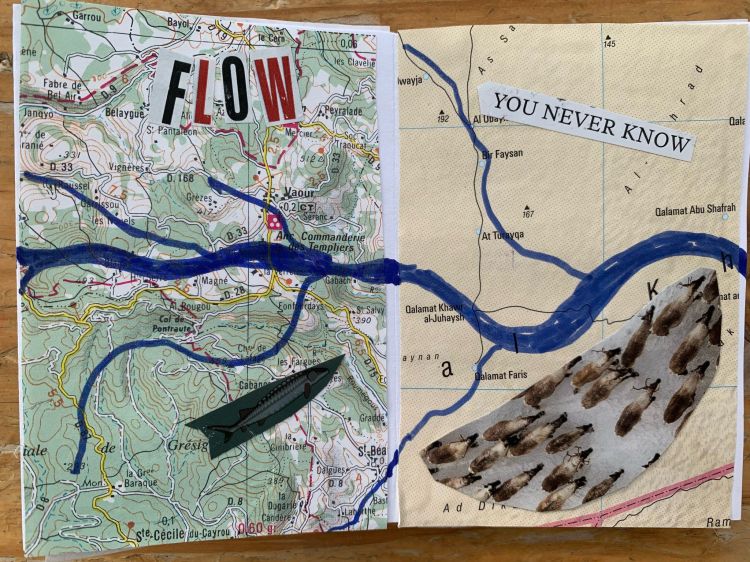
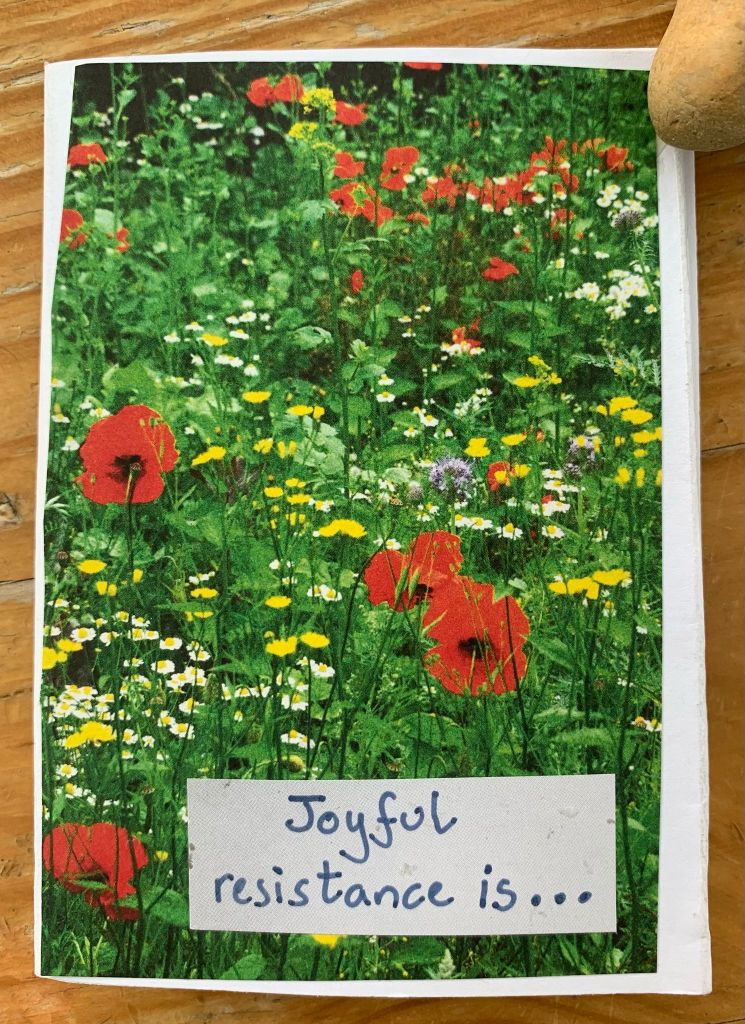
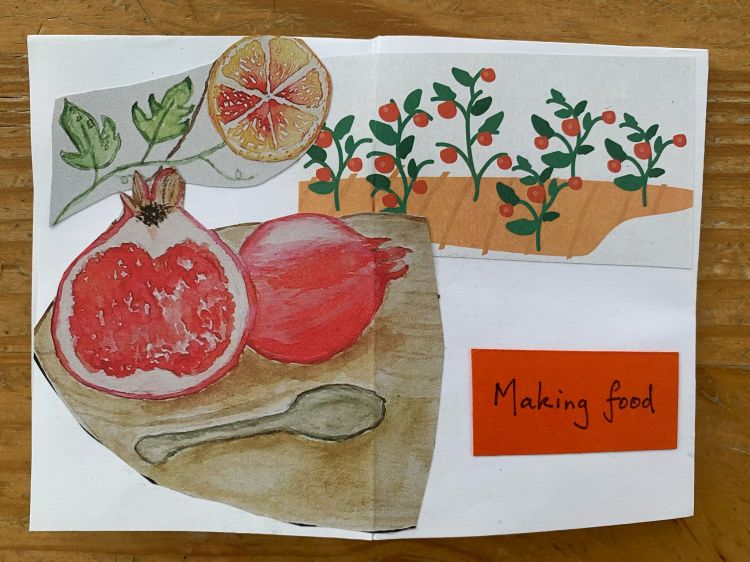
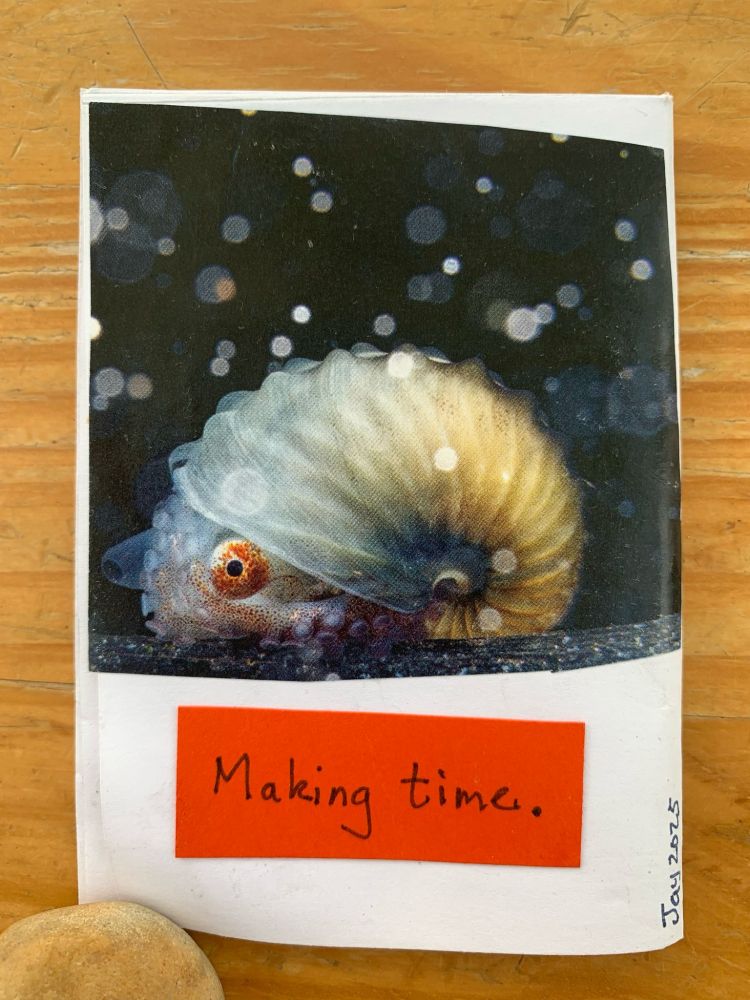
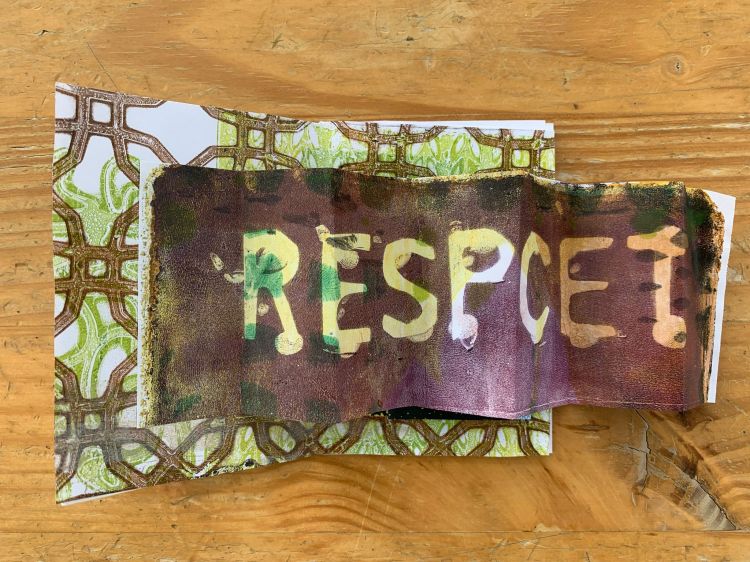
One thing that has stuck with me firmly since the retreat is the final page of Jay’s zine, which is titled “Joyful resistance is … making time” and shows a little argonaut visually resembling an ammonite. Among everything, that is what often feels like the hardest, like there just isn’t enough time to stay connected and catch up when moving elsewhere. Finding joyful resistance to this then to me means nurturing and valuing slowness. Making purposeful time for staying in connection, despite new unfurlings elsewhere.
Tracing learnings might mean taking a sketch on the beach, not knowing who I will show it to or in less metaphorical terms: trying to stay current with the Collective’ needs, plans and interests even if I can’t play an overly active role at the moment. This practice of tracing fossils implies that there is always an opportunity for deepened connection if one takes the time to slow down and think about how to create connection between then and now in a meaningful way.
 The FEELed lab