“Goblin Market” (Christina Rosetti), “Mono-n-butyl phthalate (urine) 30.9 ng/mL” (Adam Dickinson), and “Holders” (Rita Wong)
This FEELed Note is part of our occasional series featuring outstanding feelz from undergraduate students.
Christina Rossetti’s “Goblin Market” is an 1862 poem long renowned for its early inklings of feminist thought and queer love between women as solution to terror. “Mono-n-butyl phthalate (urine) 30.9 ng/mL” by Adam Dickinson is a contemporary (2018) poem that wryly weaves through the subject of toxic masculinity. Were these two poems to be wed, their resulting offspring might look something like Rita Wong’s 2015 poem “Holders” (some suspension of disbelief required). “Holders” moves through a series of short sentences, each carefully interwoven to produce a larger narrative of womanhood and femininity as power. In dialogue with the aforementioned works, Wong makes a powerful case for the strength of feminine love in a way apparently quite opposite to Dickinson’s cautions of toxic masculinity.
“Goblin Market” is exemplary of the love ethic that bell hooks sought from the world around her. hooks suggests, “we desperately need an ethic of love to intervene in our self-centered longing for change” (290). In “Goblin Market,” one of two sisters, Laura, grows restless in her day-to-day life. As a result, she is taken advantage of by a gaggle of animal-men offering fruits including “bloom-down-cheek’d peaches” and no shortage of berry varieties (Rossetti 9). As her interaction with these goblins draws her slowly nearer to the brink of death, her sister Lizzie must brave the horrible men, who attack her and douse her in fruit juices. The ensuing rescue is an erotic scene of “shaking with aguish fear” as Laura sucks the juice from Lizzie’s beaten body, becoming “like a caged thing freed” in “pleasure… and anguish” (491, 505, 522). Although this idea of love is somewhat more extreme than what hooks suggests, it is Lizzie’s overwhelming love for her sister that leads her to selflessly risk her well-being.
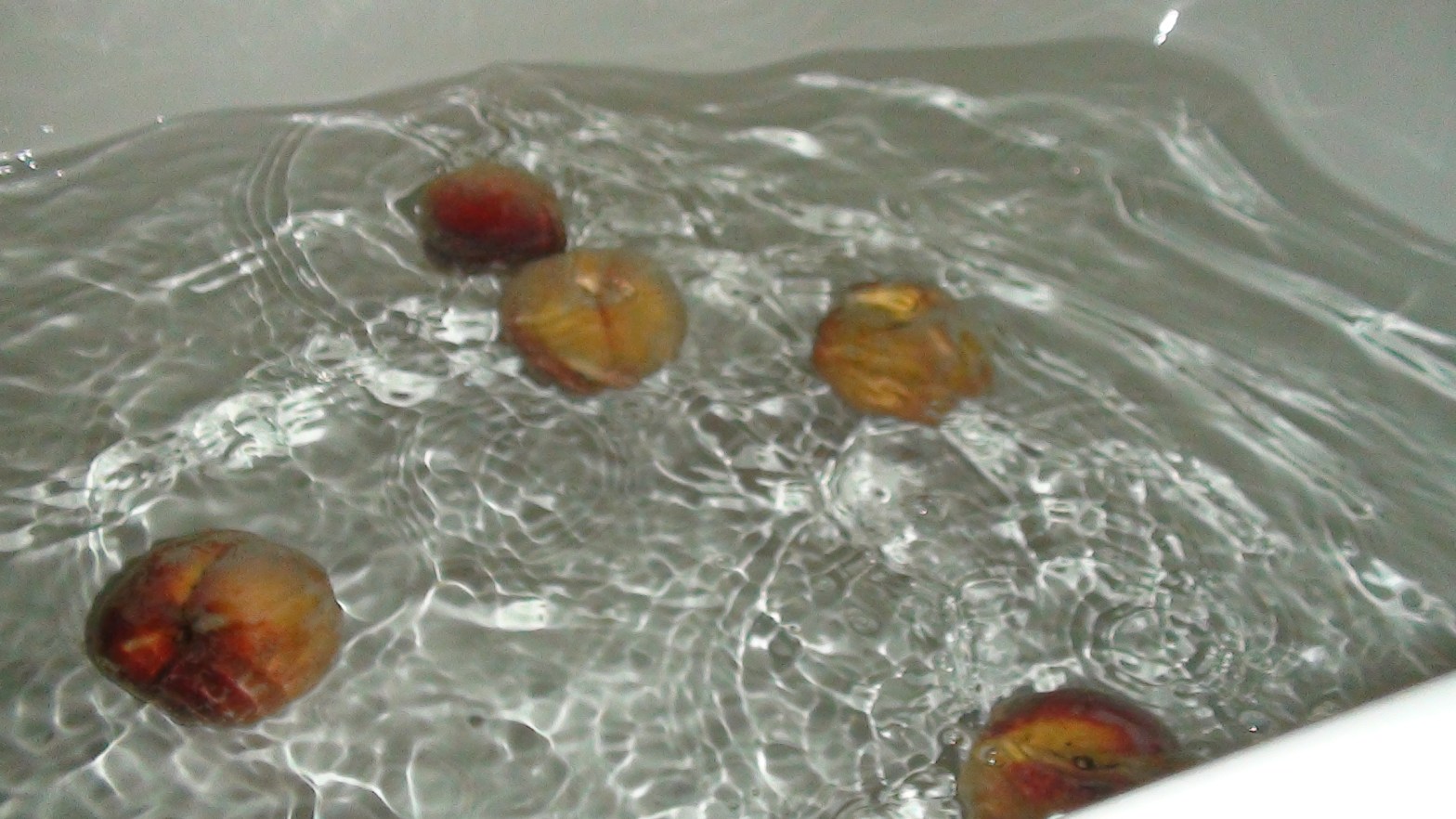
“Holders” calls back to this long-renowned poetry thematically. Wong describes women who “eat peaches [and] can huckleberries,” and “tickle each other and… lick their lips” (n.p.). Her poem evokes images of women who indulge in the pleasures and temptations of the natural world, just like in “Goblin Market…” but also, like “Goblin Market,” it insists that there is a strength in love between feminine bodies, be that erotic or other (like “remembering their mothers”)(n.p.).
“Holders’” connection to “Mono-n-butyl phthalate (urine) 30.9 ng/mL” is more evident in its stylistic form. “Mono-n-butyl phthalate” moves through what is essentially a checklist of tenets of toxic masculinity. Toxic masculinity describes “people who believe that because they have penises, they are required to act in a traditionally, almost performatively masculine way” (Atkin, n.p.). Dickinson’s poem offers “young men… laughing, as they enjoy having the bodies of men” who “will fight you” (n.p.). He asserts, “they are not women” (n.p.). The poem equates toxic men to toxic, manmade waste: “they will advance on you through stabilised rubbers and resins, including nitrocellulose and polyvinyl acetates” (n.p.).
“Holders” matches this style almost identically, working through a list of gendered traits to express the power associated with them. Thematically, however, “Holders” takes nearly the opposite stance: instead of speaking to the toxic power of hyper-masculinity, Wong describes the healing power of unimpeded femininity. Where toxic men will “come at you,” healing women “continue to stand together” (Dickinson n.p., Wong n.p.). The men “will kick your ass,” the women “build homes with their beloveds” (Dickinson n.p., Wong n.p.). The men “are glistening with sweat,” the women “protect their beating hearts” (Dickinson n.p., Wong n.p.).
Though the motif of verb-packed sentences is consistent throughout both poems, there is a clear contrast between the pungent contamination of the men in Dickinson’s poem and the hopeful unification of the women in Wong’s. This contrast is also visible through the formatting choices of either poem: “Mono-n-butyl phthalate” uses capital letters and intense punctuation, occasionally offering exclamations, whereas “Holders” offers a gentle tone through its consistent use of lowercase and selective punctuation. It is not, of course, to suggest a binary of dominant versus submissive; rather, together, these poems suggest that loud and brash equates to foolishness, whereas humility and love hold great strength.
This exchange of toxicity and health impacts not only human bodies in the social sphere but, as the poems portray, the natural world as well. The men “rally… against chemical bans” (emphasis added) and “leave oil slicks” while the women “come together in sacred commitment to all of creation,” “plant[ing] trees and gardens” (Dickinson n.p., Wong n.p.). Of course, neither poet is arguing that all men are inherently evil and all women are one with nature. Rather, they unite discourses of environmental peril and gendered power structures to illustrate a fulsome image of feminism and environment.
By evoking images of like poetry, past or future, “Holders” connects easily to course concepts of toxic masculinity and love ethic. It defines toxic masculinity antithetically; that is, it evokes notions of toxic masculinity through representation of precisely what it is not. Wong is not “‘proud’ of the type of society that white men created in America” (Atkin n.p.). She instead explores a resistance to it that specifically operates through love. She does not demonise the feminine as idealisers of toxic masculinity do.
Here, femininity is resistance, femininity is love, love is power. She writes, “no matter how many of them have been killed, beaten, insulted, the women continue to stand together” (Wong n.p). This togetherness in the face of collective struggle is exactly what bell hooks’ love ethic desires. These women, “experienc[ing] intense pain and anguish” but “in touch with a transcendent reality,” continue “the practice of loving” (hooks 292, 291, 295). Their enemy? hooks suggests the antagonist to love consists of “patriarchal manhood,” “masculinist sexist biases,” and a “focus on hardness and toughness” (291, 292). Bringing the poems and the scholarly work full-circle, hooks descriptor of anti-love is exactly how Dickinson portrays his toxically masculine male characters.
“Holders” has so much to say in so little space. It is tragic to be incapable of speaking to the depths of its meanings due to spatial constraints. But I believe it incredibly important to analyze the poem’s location in time and space – it has meaning on its own, but understanding it relative to the conversations that have happened and will happen offers a far more fulsome understanding of its underlying meaning.
On its own, “Holders” exemplifies love, but its connections to “Goblin Market” unlock a broader range of what love between women can look like. Without context, it portrays this womanly, feminine love, but “Mono-n-butyl phthalate” displays that this love contains so much information in what it actually is not. It can be understood as healing femininity, but hardly as antithesis to toxic masculinity without the broader poetic discourse.
Works Cited
Atkin, Emily. “Proud Boys and Petro-Masculinity.” HEATED, 1 Oct. 2020, heated.world/p/proud-boys-and-petro-masculinity?utm_campaign=post&utm_medium=email&triedRedirect=true. Accessed 17 Mar. 2025.
hooks, bell. “Love as the Practice of Freedom.” Outlaw Culture, Routledge, 2006, pp. 243–250, Accessed 17 Mar. 2025.
Dickinson, Adam. “Mono-n-Butyl Phthalate (Urine) 30.9 Ng/mL.” Anatomic, Coach House Books, Toronto, 2018, pp. 79.
Rossetti, Christina. “Goblin Market.” Poetry Foundation, http://www.poetryfoundation.org/poems/44996/goblin-market. Accessed 17 Mar. 2025.
Wong , Rita. “holders.” Undercurrent. Gibsons: Nightwood Editions, 2015.

Chris Urban is a student at the University of British Columbia Okanagan, which itself resides on the traditional, ancestral and unceded traditional territory of the syilx/Okanagan people. She is a hobbyist video game collector, cat lover, and most relevantly, a novice feminist. Her interest in feminism resides primarily in the idea that all people should have the right to exist independently of pre-dictated social codes and norms – everything is made up! Be who you want to be!
 The FEELed lab