Syilx people are the best protectors of our syilx lands, waters and timixʷ, and we need everyone who lives here on our territory to feel and act that way.” — Jeannette Armstrong
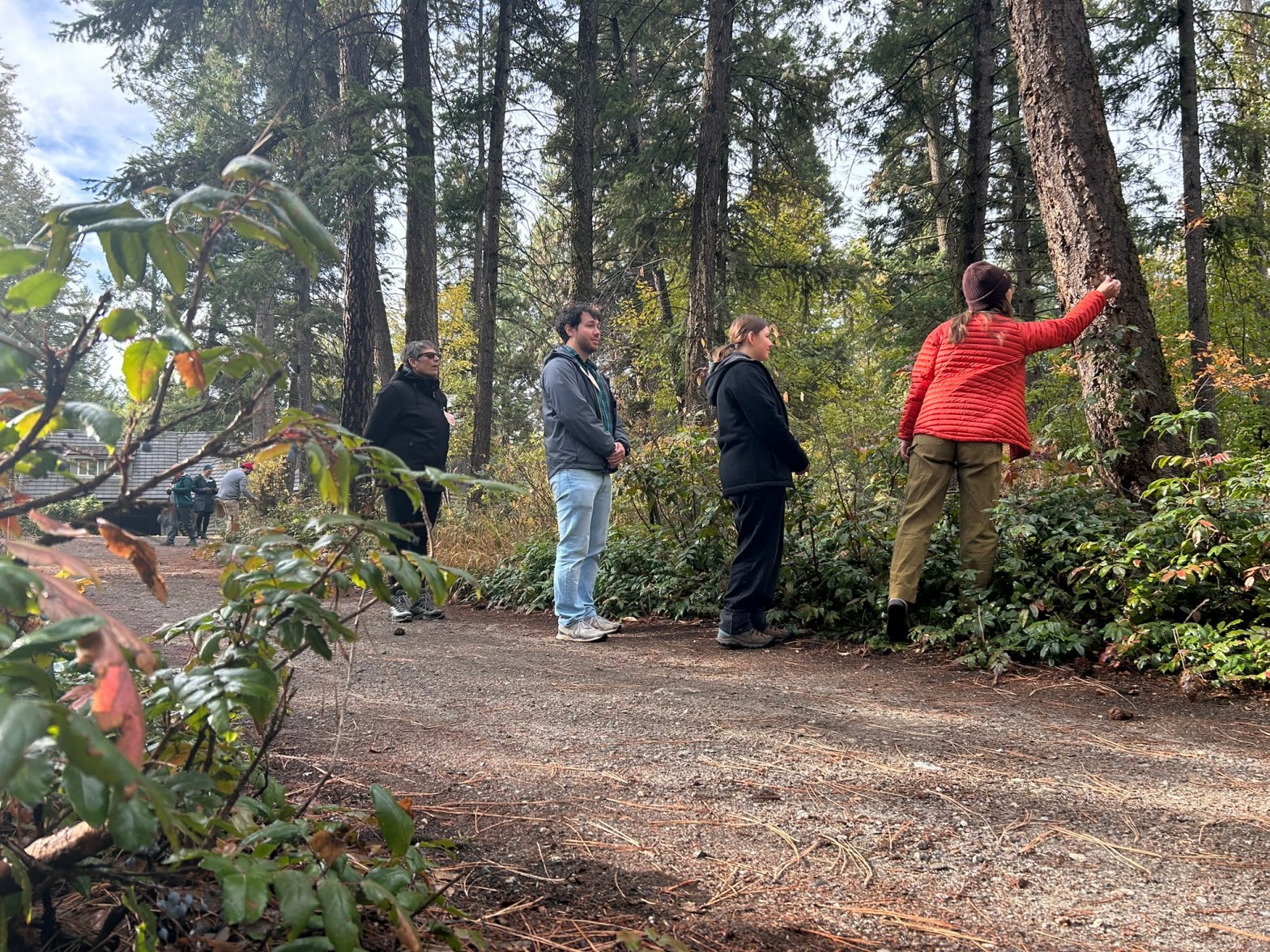
On October 14, 2025, and October 19, 2025, respectively, two groups of settlers from diverse realms of the Central Okanagan community gathered at the FEELed Lab on traditional, unceded (1) and currently occupied syilx (2) territory to participate in the “Land as Teacher” workshops.
Both workshops were facilitated by Kelly Terbasket, Program Director of IndigenEYEZ, a program with the mission of strengthening “connections with the land, ourselves and each other” through creativity, curiosity, authenticity and interconnectedness. Kelly was joined by co-facilitators Erin Delfs (UBCO alum) and Astrida Neimanis (UBCO professor). The workshops were supported by the FEELed Lab, UBCO Principal’s Research Chair in Communities, Justice, and Sustainability, and the UBC Centre for Climate Justice (CCJ).
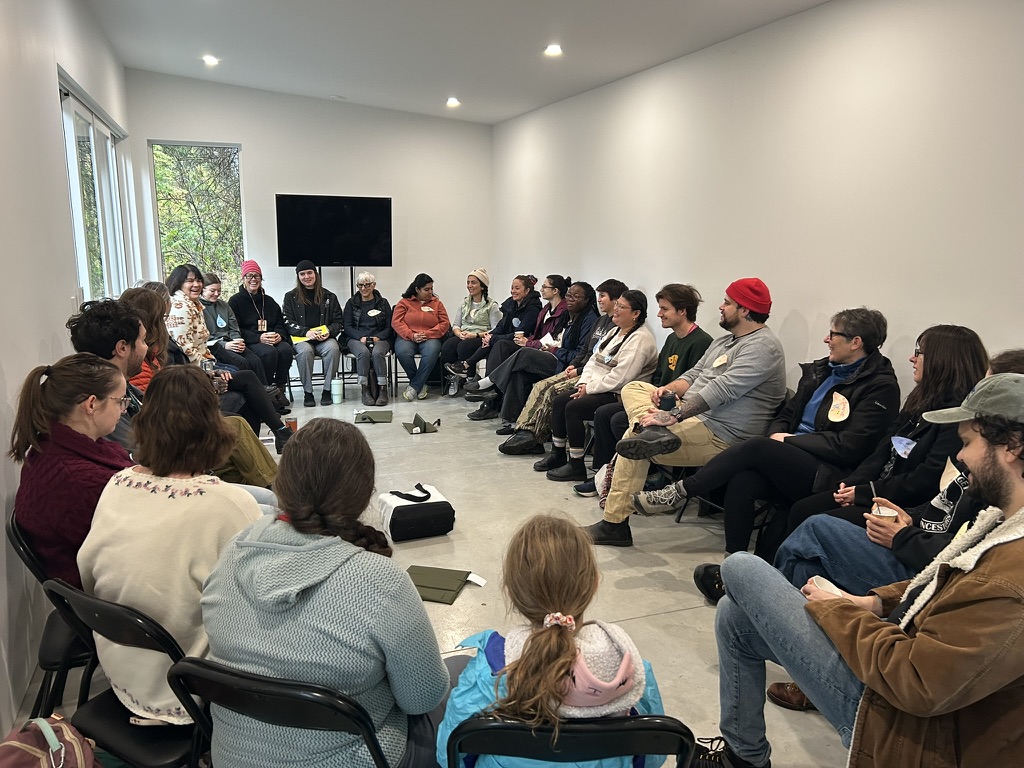
The “Land as Teacher” workshops invited people – primarily settlers – from all sectors and walks of life who want to move beyond land acknowledgements and into active, relational responsibility for living on syilx homelands. On these two days, the FEELed Lab vibrated with wonder and interest among the poets, social workers, writers, community service providers, educators, parents, and students who came to learn with the land.
The workshop was oriented around four Micro-shifts for Living in Right Relationships:
- From Understanding to Action — practical ways to take responsibility for the place where you live
- Feeling Less Helpless — shifting from overwhelm to empowered, relational action
- Gratitude Practices — noticing and naming what we are grateful for as a foundation for care
- Changing Our Values & Behaviors — exploring how our daily choices reflect our relationship to land and community
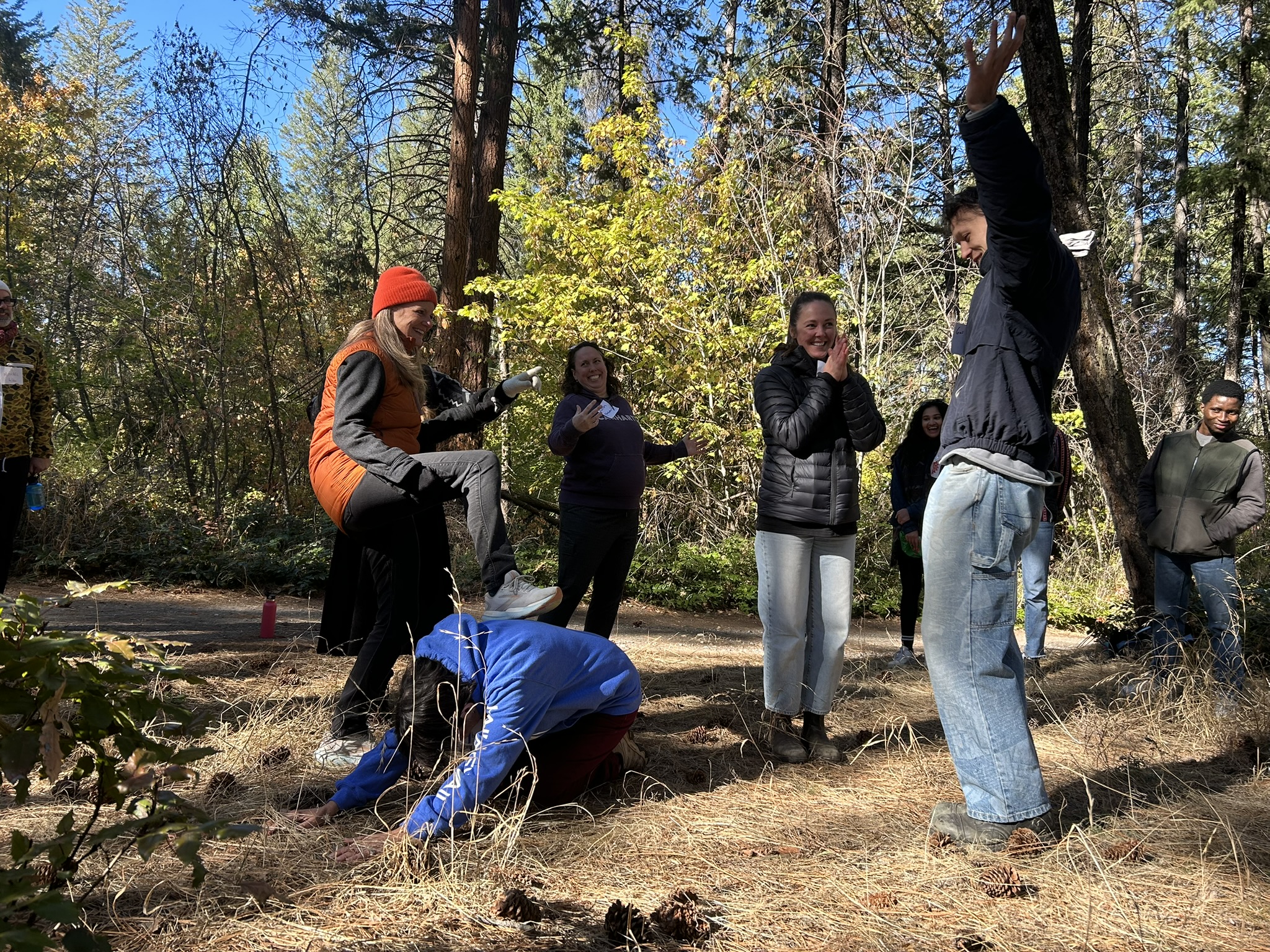
Participants were invited to move, act, sense, observe, introduce, follow, lead, trace and trust as part of the process. Through creative and sensory exercises and activities, Kelly and Erin invited everyone to notice their relationship with the land, wonder how/when/where their intentions—for the day, and more generally as non-syilx people residing on syilx land—show up, and learn how to perceive, imagine, and interact with the land, guided by syilx worldviews.
“When I think about Land as Teacher, I feel a lot of hope for the people that showed up. This is not an informational journey; it is a relational journey, and it is an inner journey. I saw people courageously do that inner work, which does take more courage than sitting back and receiving information. There was an openness, dedication to learning, and incredible creativity that came out of the workshops; powerful connections were made within the groups, among diverse people from all walks of life and different sectors.” – Kelly Terbasket, Facilitator
“Through creative and land-based activities, these IndigenEYEZ workshops invited participants to tap into new senses; to collectively imagine/reimagine ways to act on our responsibilities to syilx land and lifeways; and to ground these explorations in practices of wondering, noticing, and learning. It was a hopeful experience to be in the moment with open, attentive, and caring community members.” – Erin Delfs, Co-facilitator
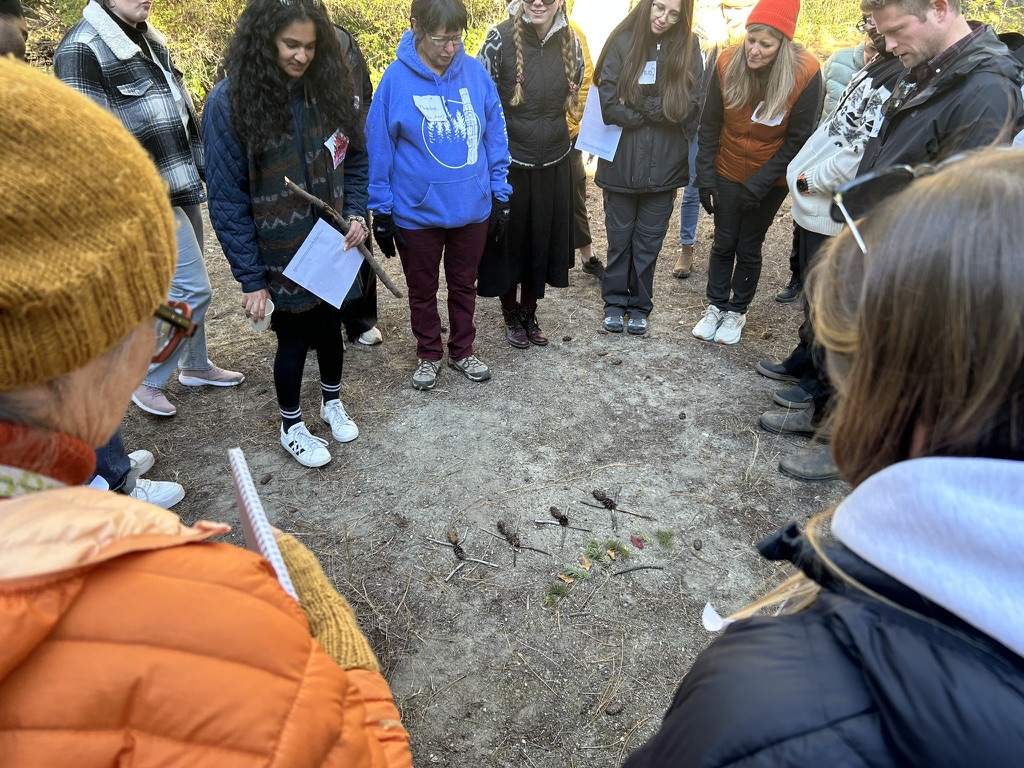
The FEELed Lab and its members, alongside the workshop participants, are grateful to Kelly, Erin and Astrida for sharing their care, encouragement and creativity. Thank you for your flowing-together through our shared time, the weaving-together of backgrounds and respective knowledges, and the sowing-together of ‘new’ (or ‘old’) ways of imagining, practicing and interacting.

Check out the IndigenEYEZ website, Instagram, and donation page to explore the learning opportunities they offer and support the critical work they do.
You can learn more about past and ongoing collaborations between IndigenEYEZ, FEELed Lab and UBC’s CCJ around Challenging Climate Justice, Engaging Earth Sense (March 2025) or Connecting towards sustainable futures (April 2025).
(1) “Unceded” means that the land was never traded, sold, or transferred through treaties or formal agreements by Indigenous peoples who have lived on these lands since time immemorial. European settlers continue to colonize these lands and enact genocidal violence against syilx Okanagan people through occupation and extraction.
(2) When featuring nsyilxcən words in this blog post, we follow the protocol shared by syilx journalist Kelsie Kilawna (2023) who writes: “According to some n̓syilxčn̓ language keepers, there are no capitalizations in the spellings of any n̓syilxčn̓ words. In an egalitarian society, capitalization insinuates there is something that holds more importance over another, and that does not fall in line with syilx ethics.” Accordingly, all nsyilxcən words in this blog post are written using lowercase letters. We acknowledge that this practice may vary across communities and locales.
This project is supported by the Principal’s Research Chair in Communities, Justice and Sustainability, The Centre for Climate Justice and the FEELed Lab.
 The FEELed lab
1 comment