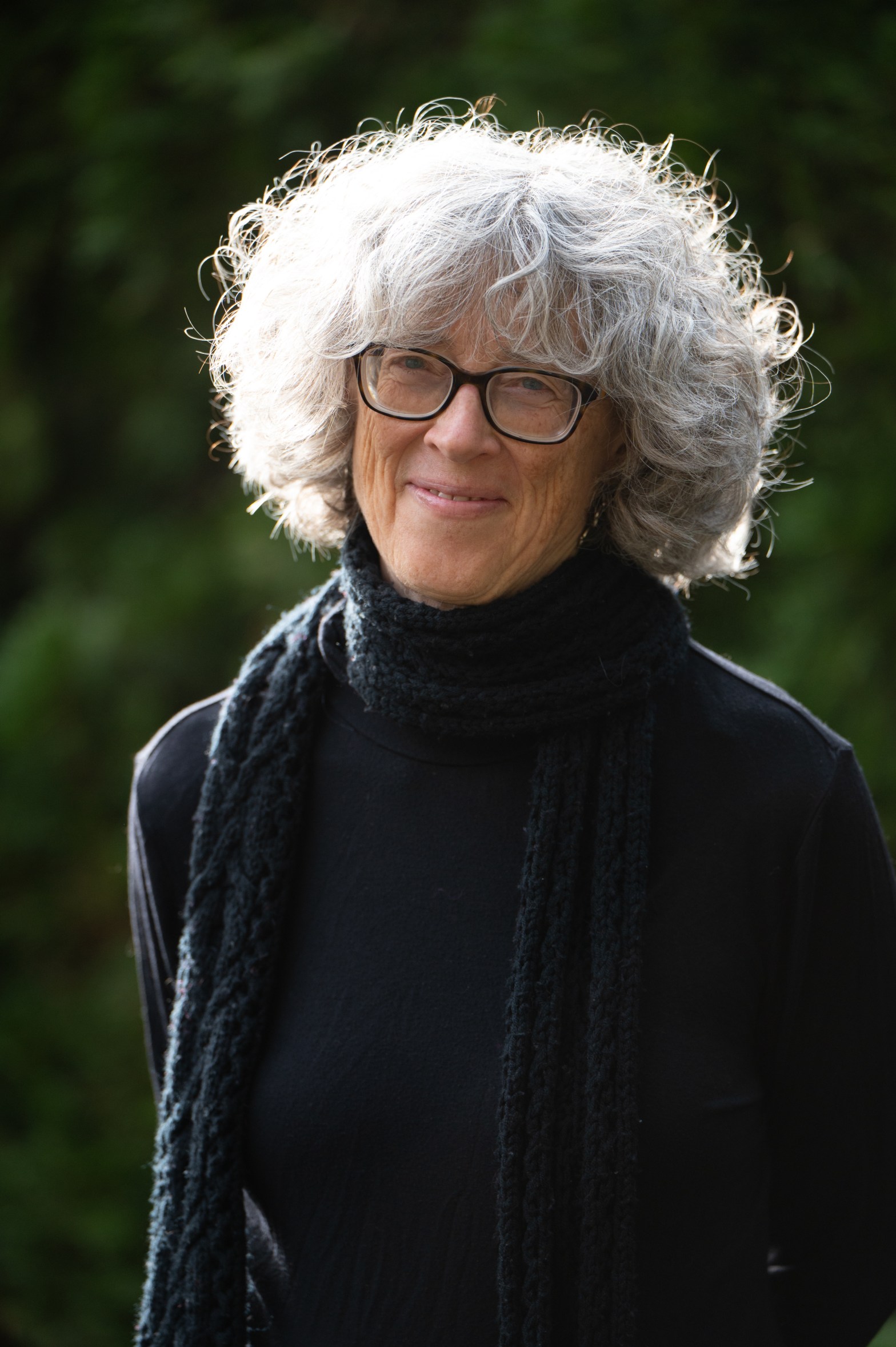
As we welcome new people to the FEELed Lab, we want to make space for longer introductions to project team members and research affiliates joining us this year. This profile is on long-time Woodhaven friend Nancy Holmes, who is now also joining the lab as a community affiliate.
- Can you tell us about your work/research?
I am retired now, but I continue to work on many of the same things I did when I was employed at UBC. Mostly, I still am writing: I write a short essay once every four to six weeks for my blog “Retiring in the Dark” on Substack where I think about being an unpracticed elder in these very dark times. I also write poetry and continue to do a few community projects, such as serve on the board of the Friends of Woodhaven and help run a literary reading series for local writers (Valley Voices.) I am a devoted gardener and became fascinated by native bees—this interest came out of a big SSHRC-funded research project I did in my last years in the academy. I still give “bee talks” to children, schools, and community groups. In a nutshell, my work continues to revolve around this place, my relationship to the Okanagan and to the Woodhaven neighborhood and what I love continues to be a passion for the arts and the natural world.
2. Why did you want to work with the FEELed Lab?
I have a long history with Woodhaven. Back in 2009, a few years after I moved into the neighborhood, I met the former park caretaker, Lori Mairs. She was an artist and she knew more about the local plants and critters (as she always called them!) than anyone I knew. We really connected and soon began a year-long eco art project in Woodhaven park. It was a huge project in 2010 and a real success that led to the Regional District negotiating with UBC to occupy the house and grounds of the current Woodhaven Eco Culture Centre where the FEELed Lab is located. For many years I helped organized events and eco art projects in and around Woodhaven and the Eco Culture Center, so I feel very connected and close to the place and the work that is done there.
3. Why are expansive engagements with environmental issues important?
Our society is going through very troubling times politically, but I remain convinced our most pressing and potentially tragic problem is our increasingly devasted ecosystems. However, anyone who loves nature and wants to help sustain places and beings comes up against the challenge of sustainable dwelling and the heart-wrenching pitfalls of engaging with human beings in all their complexity. I believe art and artists help complicate and enrich ideas about our relation to places and other beings. The state of planet for the survival of human and other beings is such that we must work with and talk to all people whether we agree with their values or not. Artists can help connect people whose values and prejudices hurt us or conflict with each other. Art and bees, for example, became a potent mix. Bees are charming and charismatic creatures. Since issues around pollination can be experienced as a very local issue and people can relate to bees, art can help almost all people rally behind various calls to action- diverse and multi-valued people. Good community art projects make room for all of us in a temporary community of stewardship and caring. Poetry might have a less public-spirited aim, but it is also a way to engage and think differently. In my old age, I tend to lean more into poetry and writing than big community projects, but beauty and wonder remain non-confrontational ways to love and move towards change.

