This post was written by FEELed Lab Director, Astrida Neimanis
The beginning of the school year is another occasion to restart habits that may have gone dormant over the summer. For many, this is an attempt to put into place tactics and strategies that can set us up to meet some of our expectations for the coming term. For me, this definitely means turning back to writing, in a more disciplined way! I look to the start of term as a reminder to think more deliberately about my writing practice.
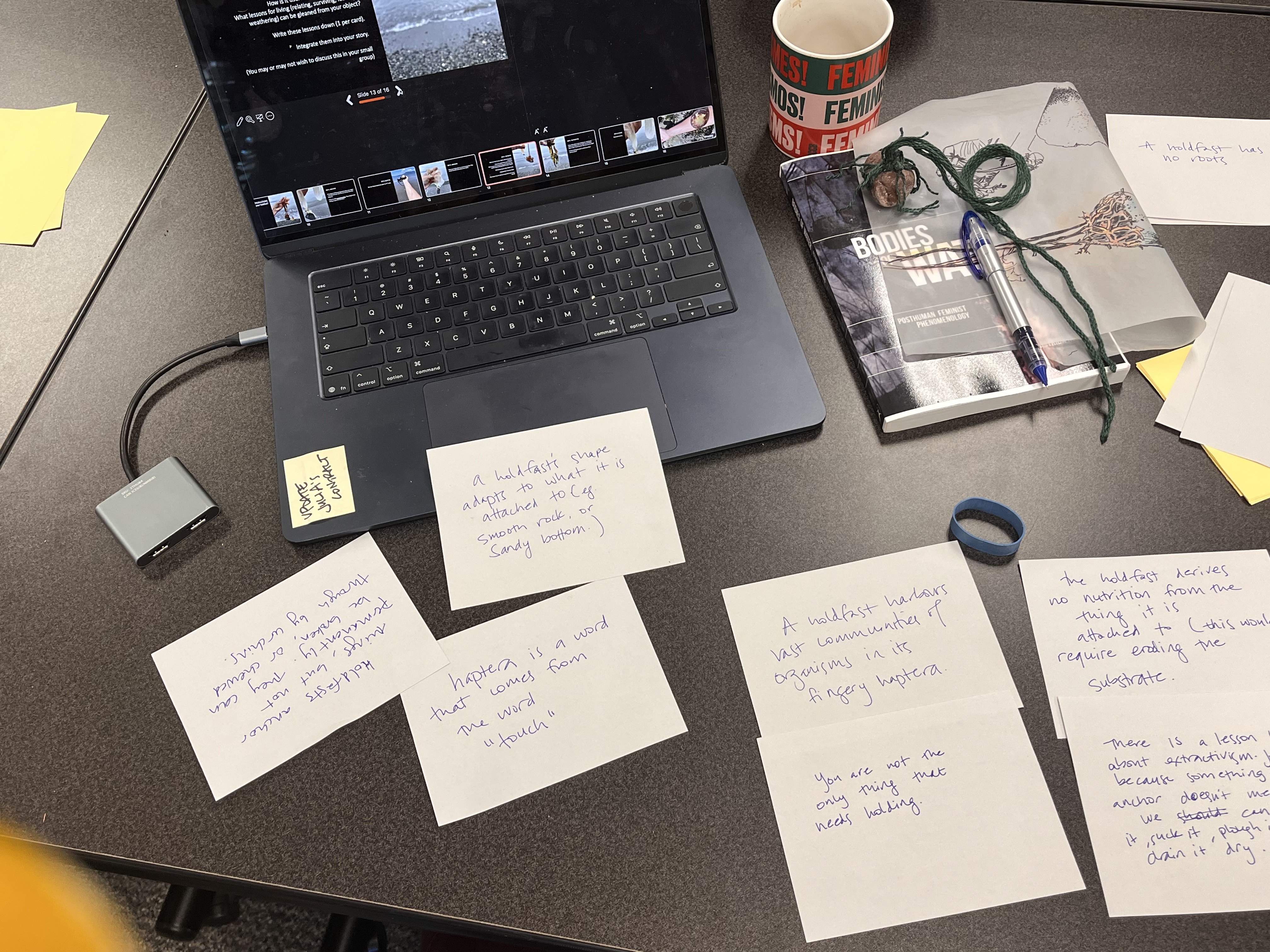
I love thinking about ‘practice’ – what it is and what it means to have a practice. As Jen and I write at the end of the Prologue in How to Weather Together:Feminist Practice for Climate Change:
I love this: “Practices are the habits we choose.” So if writing is a practice, what kinds of habits are we choosing when we do it? What parts of this habit end up choosing us?
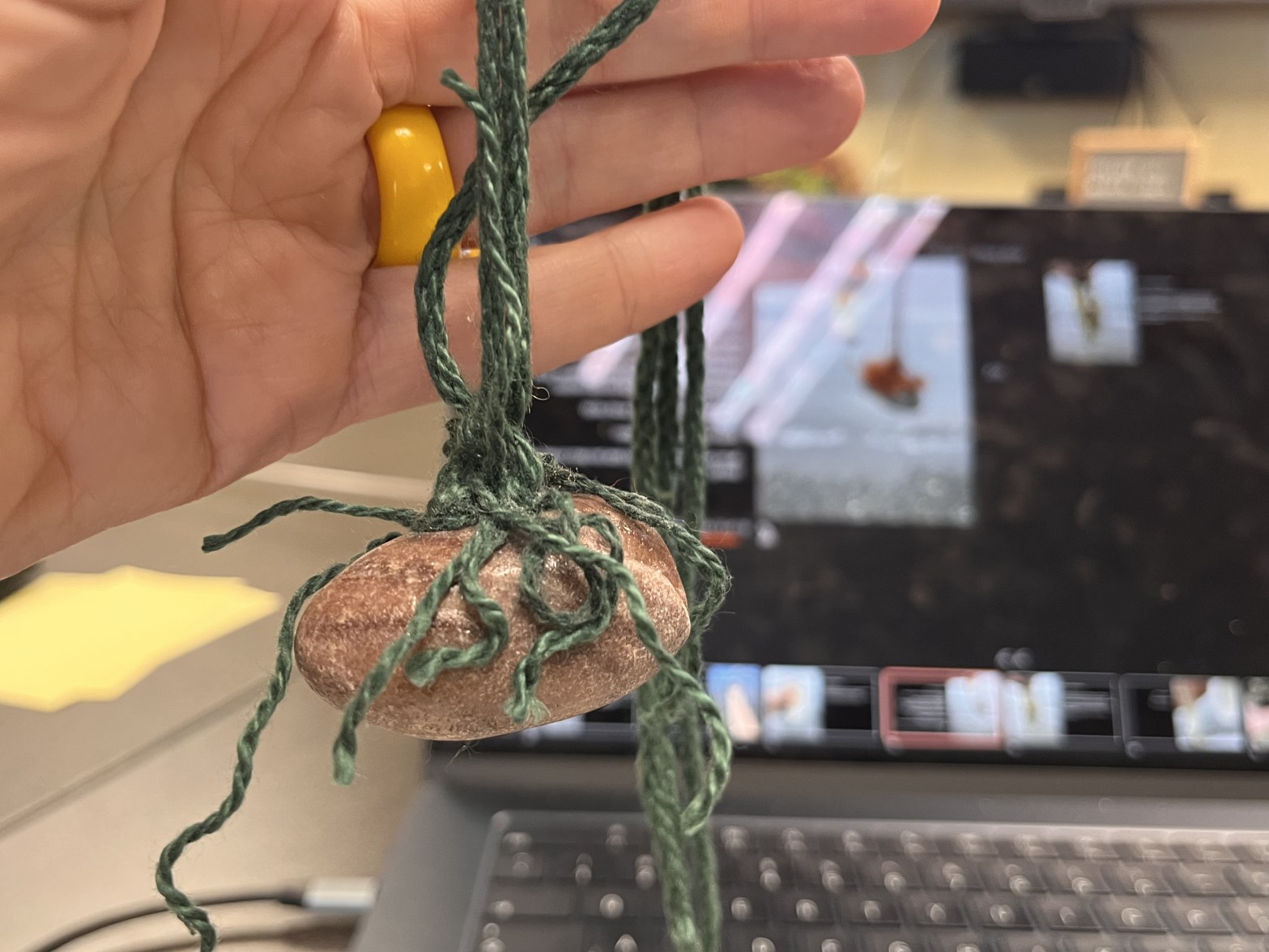
I used these reflections when planning the first workshop of Skilling Up for People and Planet – a new workshop series we are running this year in collaboration with ICER, and Storying Otherwise Hub, and the UBC Centre for Climate Justice. I wanted to share some of the practices that I use to help me write with the world, as opposed to about it (or against it!).
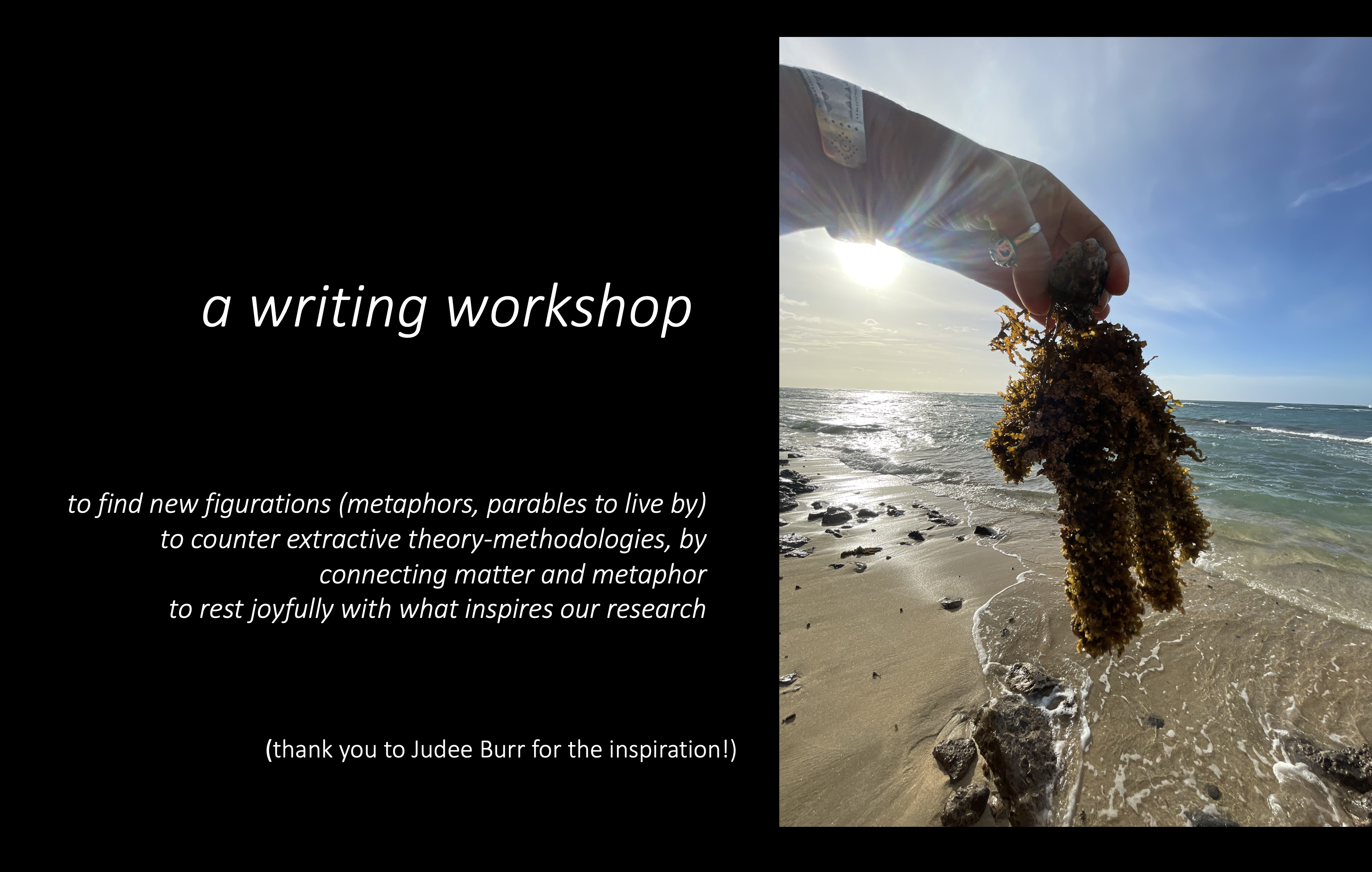
For me – and as it turned out, for most of the participants in the workshop – writing as “a practice of being in love with the world” also means being attuned, specific, and honest about how the world appears to us (other phenomenologists will recognize this language!).
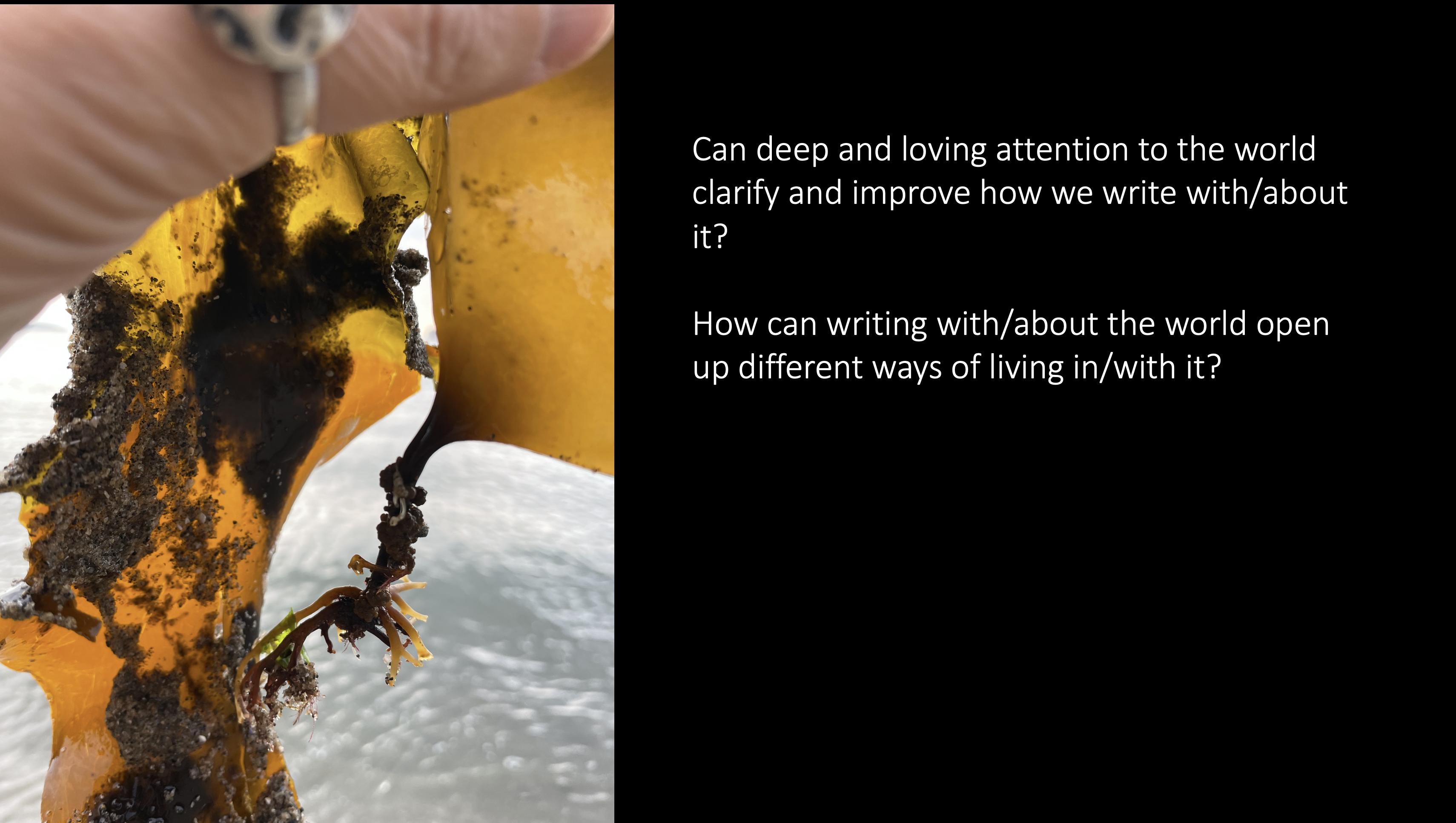
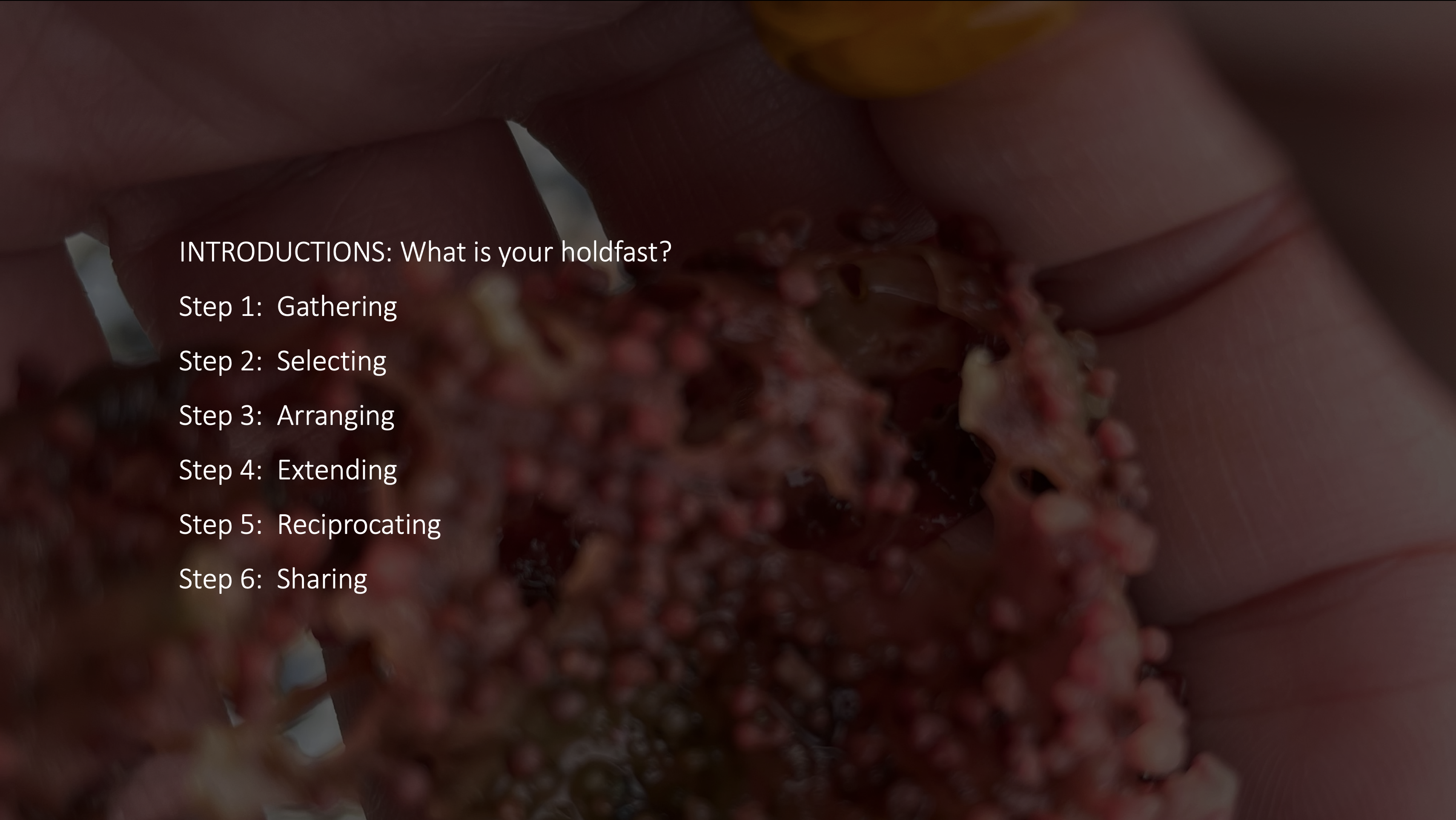
The first part of our workshop thus wanted to get honest–accurate, specific, material, objective. We began by writing “factually” about things that might inspire us or our research. We then selected and arranged these ‘facts’ in the form of a narrative.
If being in love with the world also means learning from it, the second part of the workshop involved “extending.” This involved extending facts into the territory of metaphor, and more specifically, of the figuration: what Rosi Braidotti and Donna Haraway have described as “living maps” or “material semiotic knots.” What do the things we write with teach us about how to be in the world?
Finally, the third (quiet and introspective) part of the workshop asked us to think ethically and reciprocally about what we then owe the world, and the ‘objects’ or our research and writing practices. What habits of reciprocal relation can we choose, as part of a writing practice? How can we give back?
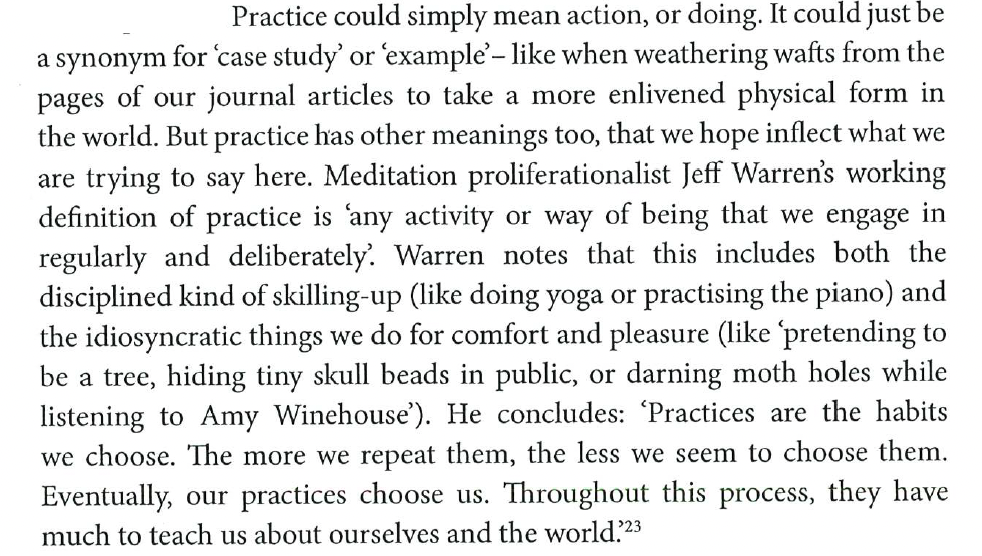
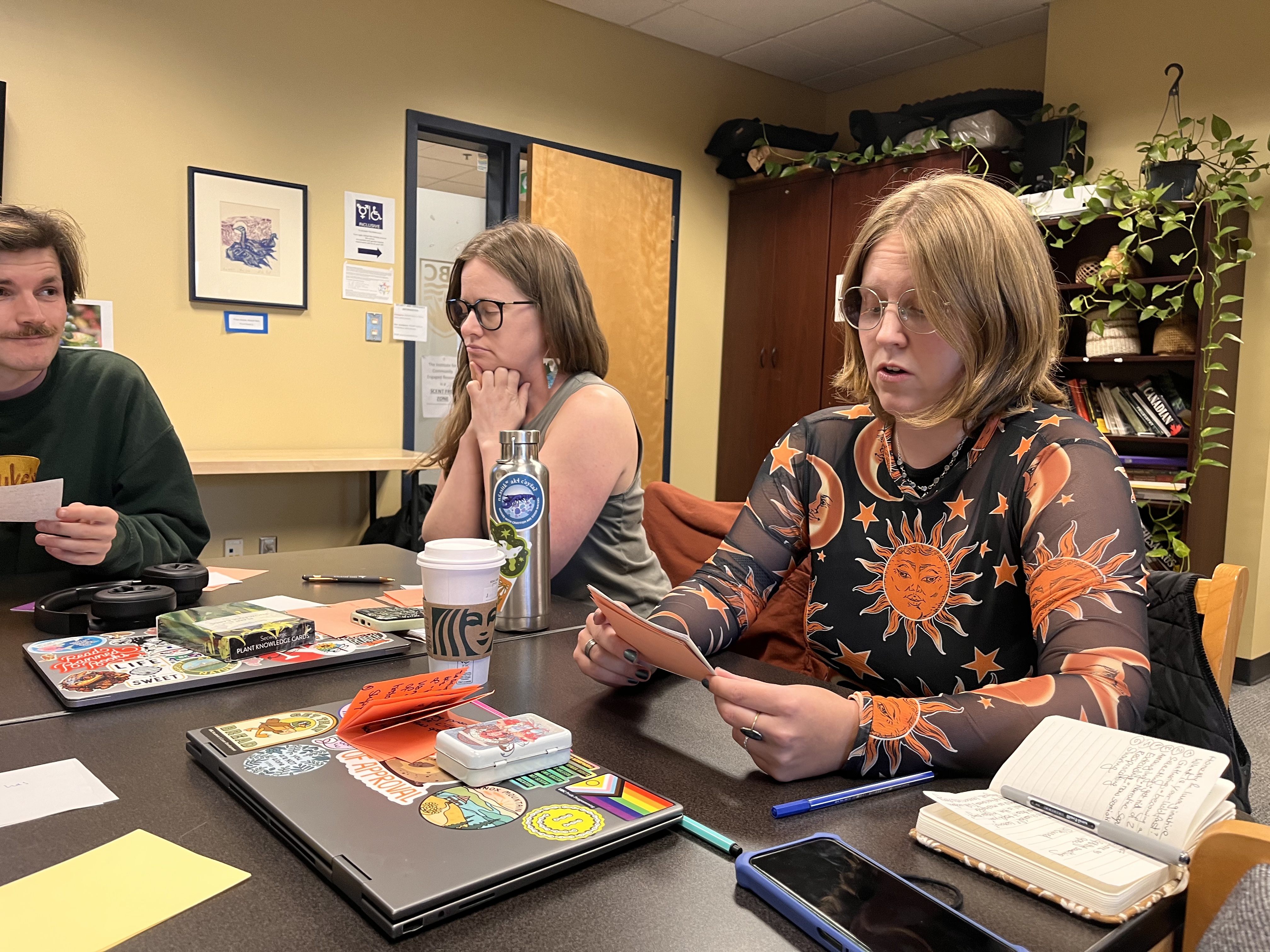
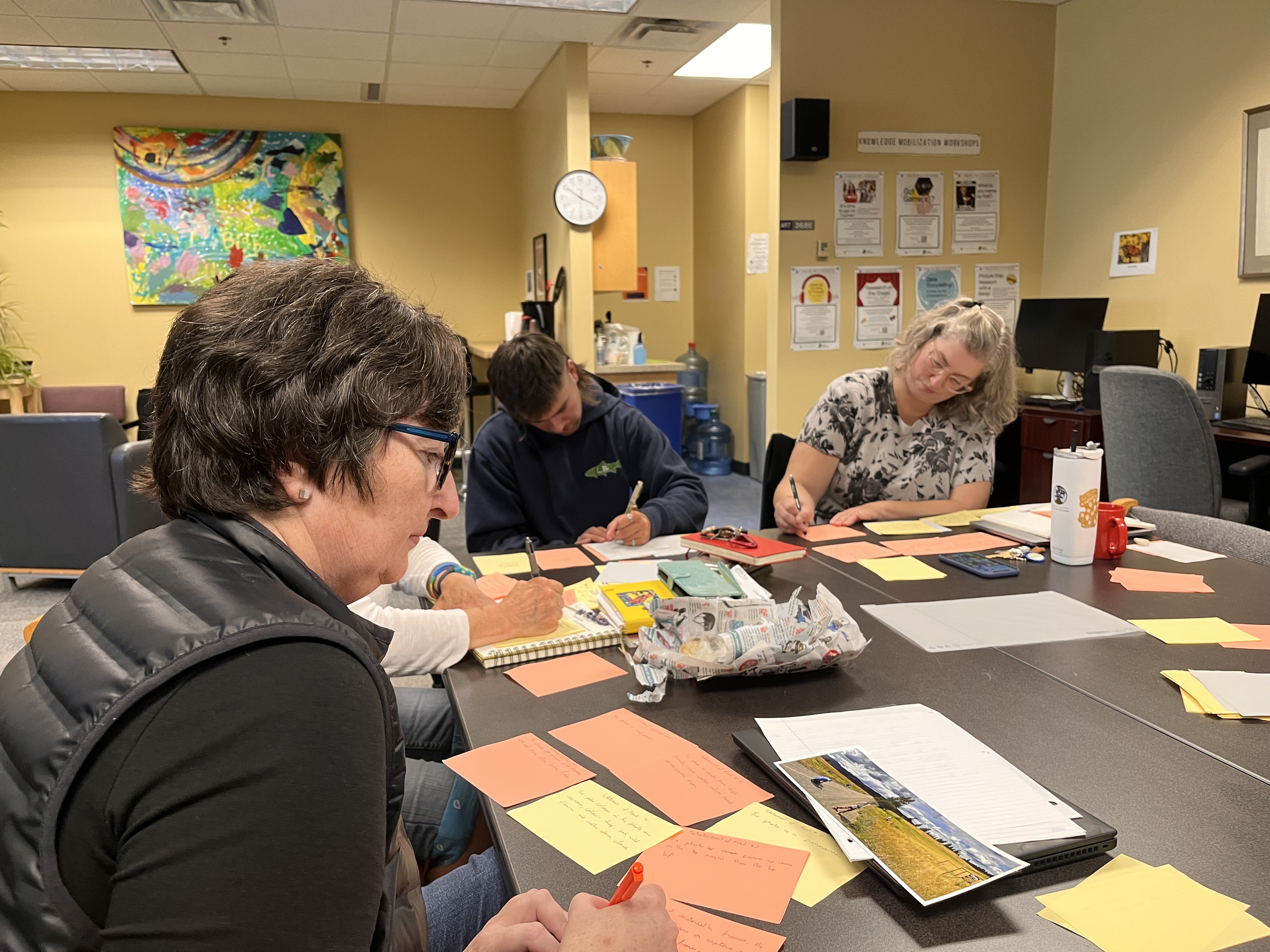
The workshop was attended by a small group of staff, faculty and students. We went through a few rounds of prompted writing, sharing some of what we wrote along the way. As to be expected, this also generated some accidentally exceptionally beautiful poetry about a diverse range of things – from guitar picks to milkweed to a set of keys!
Thanks to everyone who participated! Keep your eyes peeled for details of upcoming workshops!

